Author: admin

  • Feeling Sick on Koh Lanta? What to Do and Where to Go

    Feeling Sick on Koh Lanta? What to Do and Where to Go

    Key takeaways

    • If you are feeling sick on Koh Lanta, pharmacies in Saladan and along the west-coast road can help with minor problems.
    • Koh Lanta Hospital is near Lanta Old Town; larger hospitals are in Krabi Town on the mainland.
    • Call 1669 for an ambulance in an emergency. Tourist police: 1155.
    • Any fever, especially in the monsoon season, needs a doctor because of the risk of dengue.

    Nobody plans to be ill on holiday, but heat, new food, long journeys and late nights catch up with plenty of travellers. If you are feeling sick on Koh Lanta, the most useful thing is knowing where to go and how serious your symptoms are.

    This guide walks you through the options on the island, from a quick chat with a pharmacist to hospital care, and helps you decide which one fits how you feel.

    Feeling sick on Koh Lanta? First, how unwell are you?

    It helps to sort symptoms into three rough groups before deciding what to do:

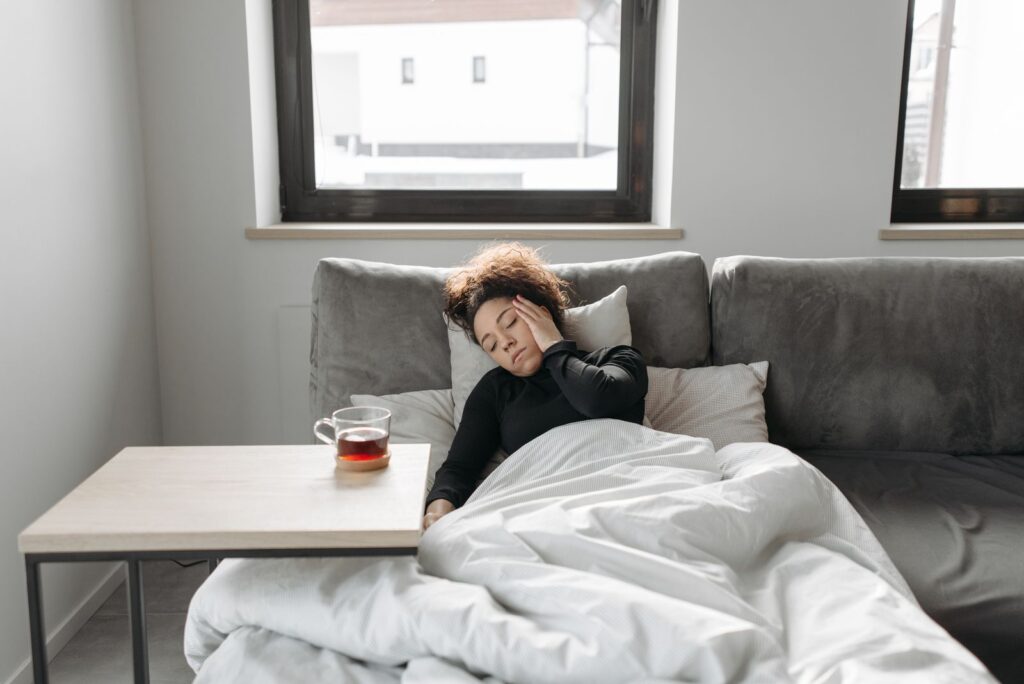
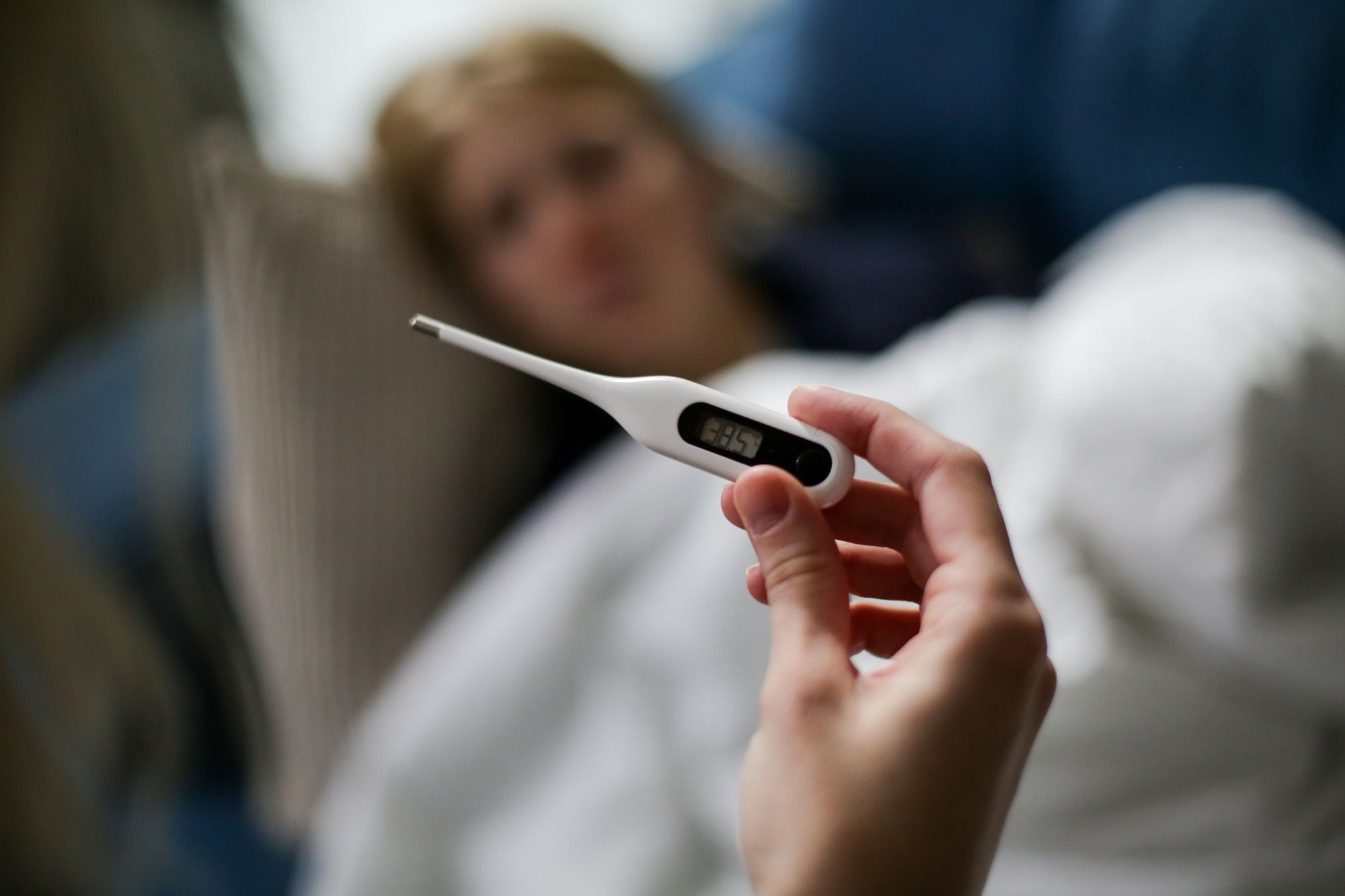
    Woman lying on a sofa with her eyes closed, feeling unwell
    Photo: Andrea Piacquadio / Pexels
    • Minor: mild headache, a hangover, slight tummy upset, a cold, insect bites, mild sunburn or feeling tired and dehydrated. Rest, fluids and a pharmacist are usually enough.
    • Needs a doctor: any fever, diarrhoea lasting more than a couple of days or with blood, a wound that looks infected, an ear infection after diving, or anything that is getting worse rather than better.
    • Emergency: chest pain, difficulty breathing, confusion, fainting, a serious injury, severe allergic reaction or signs of heatstroke. Call 1669.

    If you are not sure which group you fall into, err on the side of seeing a doctor.

    Where are the pharmacies on Koh Lanta?

    Pharmacies are common in Saladan, the main town near the ferry pier in the north, and along the main road that runs down the west coast past Klong Dao, Long Beach, Klong Khong and Klong Nin. Pharmacists can advise on many everyday problems.
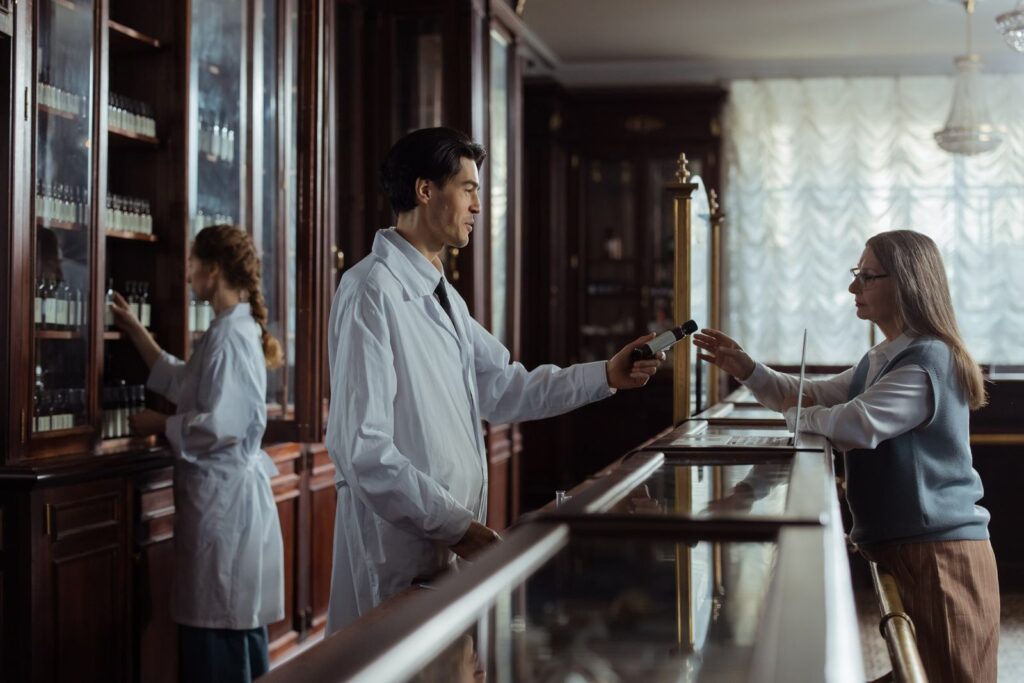
    Pharmacist helping a customer at a pharmacy counter
    Photo: cottonbro studio / Pexels

    Many pharmacists in tourist areas are used to helping visitors and can explain how to take what they give you. Tell them about any allergies, medicines you already take and whether you might be pregnant. If they suggest you see a doctor, take that advice seriously rather than trying another shop.

    They can usually help with:

    • Oral rehydration salts for diarrhoea, vomiting or heat.
    • Simple pain relief and remedies for colds and allergies.
    • After-sun gel, insect repellent and bite creams.
    • Basic dressings and antiseptic for small cuts and scrapes.

    Koh Lanta tip: Take photos of the labels on any medicines you bring from home. It makes it much easier for a Thai pharmacist or doctor to understand what you already take and avoid anything that might interact.

    When should you go to Koh Lanta Hospital?

    Koh Lanta Hospital is a government hospital near Lanta Old Town on the east coast of the island. It is the place to go if you need a doctor urgently and your symptoms are not improving with rest and pharmacy care.
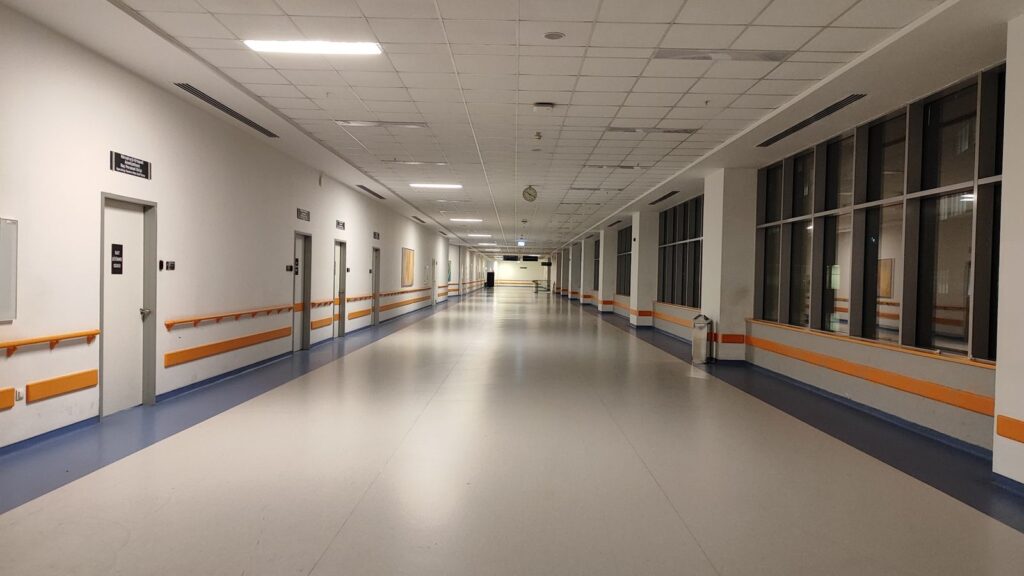
    Long, clean hospital corridor
    Photo: Burçak Çubukçu / Pexels

    Depending on where you are staying, it can be a fair drive across the island, so do not wait until late at night if you are getting worse during the day. If you are too unwell to travel safely, or someone is seriously ill, call 1669 rather than trying to drive.

    When do you need a hospital in Krabi?

    For more serious conditions, specialist care or tests that are not available on the island, patients may be referred to the larger hospitals in Krabi Town on the mainland. Getting there involves crossing to the mainland, so it takes time.
    Car driving along a quiet road through green forest
    Photo: Naveen Prabhakaran J / Pexels

    This is one reason it pays to act early. A problem that is caught in the morning is much easier to manage than one that turns into an emergency at midnight.

    Why does a fever need a doctor on Koh Lanta?

    Dengue fever is spread by mosquitoes and occurs in Thailand, with more cases during the rainy monsoon season, roughly May to October. Early dengue can feel like flu: high fever, headache, pain behind the eyes, aching muscles and joints, and sometimes a rash.

    Because dengue and other infections can become serious, any fever on holiday needs a doctor, not just rest at your villa. Avoid self-medicating with anti-inflammatory painkillers until a doctor has checked you, and use insect repellent day and night to lower your risk of being bitten.

    Is your travel insurance ready?

    Before you need it, check that your travel insurance covers medical treatment in Thailand, including hospital stays and transfers to the mainland. Note the emergency phone number and policy details somewhere you can find them quickly.
    Passports tucked into the pocket of a travel bag
    Photo: Kenneth Surillo / Pexels
    • Keep a photo of your passport and insurance documents on your phone.
    • Call your insurer early if you are admitted or referred to hospital.
    • Check whether activities such as diving or riding a scooter are covered.
    • Keep receipts for any medical costs.

    When is a home-visit IV drip a good fit?

    A home-visit drip is a wellness service, not emergency or hospital care. It can be a good fit if you are generally well but feeling drained, for example after a hangover, a long journey, too much sun or a mild bout of dehydration, and you would rather rest at your accommodation.
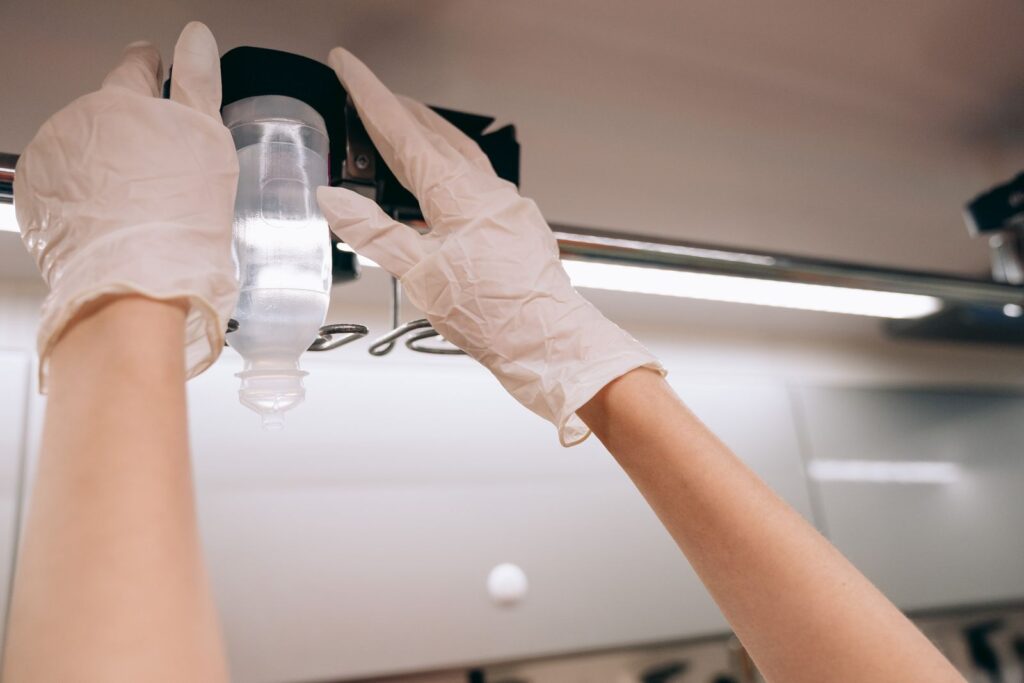
    Gloved hands adjusting the drip chamber of an IV line
    Photo: Mikhail Nilov / Pexels

    A registered nurse comes to you and runs a health check first. If anything suggests you need a doctor, such as a fever, severe pain or symptoms that do not add up, the nurse will tell you and will not go ahead with a drip. You can see the full process on our how it works page. For upset stomachs specifically, our guide on what to do with an upset stomach on Koh Lanta goes into more detail.

    When to get medical help

    When to get medical help: call 1669 (Thailand emergency ambulance) or go straight to hospital for chest pain, difficulty breathing, confusion, fainting, a seizure, severe bleeding, a high fever with a rash or bleeding gums, severe abdominal pain, signs of heatstroke, or vomiting that stops you keeping any fluids down. For help with crime or lost documents, the tourist police number is 1155.

    A simple plan if you start to feel unwell

    1. Stop, rest somewhere cool and drink water or oral rehydration salts.
    2. Decide whether your symptoms are minor, need a doctor or are an emergency.
    3. For minor problems, ask a pharmacist. For anything more, see a doctor at Koh Lanta Hospital.
    4. In an emergency, call 1669 straight away.
    5. Let someone you trust know how you are, and contact your insurer if you need hospital care.

    If you are well enough for a wellness visit and would like a nurse to come to you, message us on WhatsApp via our contact page. We will always be honest if we think a doctor is the better option.

    Frequently asked questions

    Is there a hospital on Koh Lanta?

    Yes. Koh Lanta Hospital is a government hospital near Lanta Old Town on the east coast. Larger hospitals are in Krabi Town on the mainland.

    What is the emergency number in Thailand?

    Call 1669 for an emergency ambulance. The tourist police can be reached on 1155.

    Should I see a doctor for a fever on Koh Lanta?

    Yes. Any fever on holiday should be checked by a doctor, especially in the monsoon season when dengue is more common.

    Can I get an IV drip if I have a fever?

    A wellness drip is not a substitute for a doctor when you have a fever. The nurse will advise you to get medical care first.
  • Is It Safe to Get an IV Drip in Thailand?

    Is It Safe to Get an IV Drip in Thailand?

    Key takeaways

    • An IV drip in Thailand can be safe when it is given by a registered nurse after a proper health check.
    • Look for sterile, single-use equipment, products from licensed suppliers and clear answers to your questions.
    • Some people should not have a drip at all, including those with certain heart or kidney conditions.
    • An IV drip is a wellness service. Serious symptoms need a doctor or hospital, not a drip.

    Wellness drips are offered in many Thai holiday spots, from city spas to beach bungalows. So is it safe to get an IV drip in Thailand? The honest answer is that it depends almost entirely on who is giving it and how.

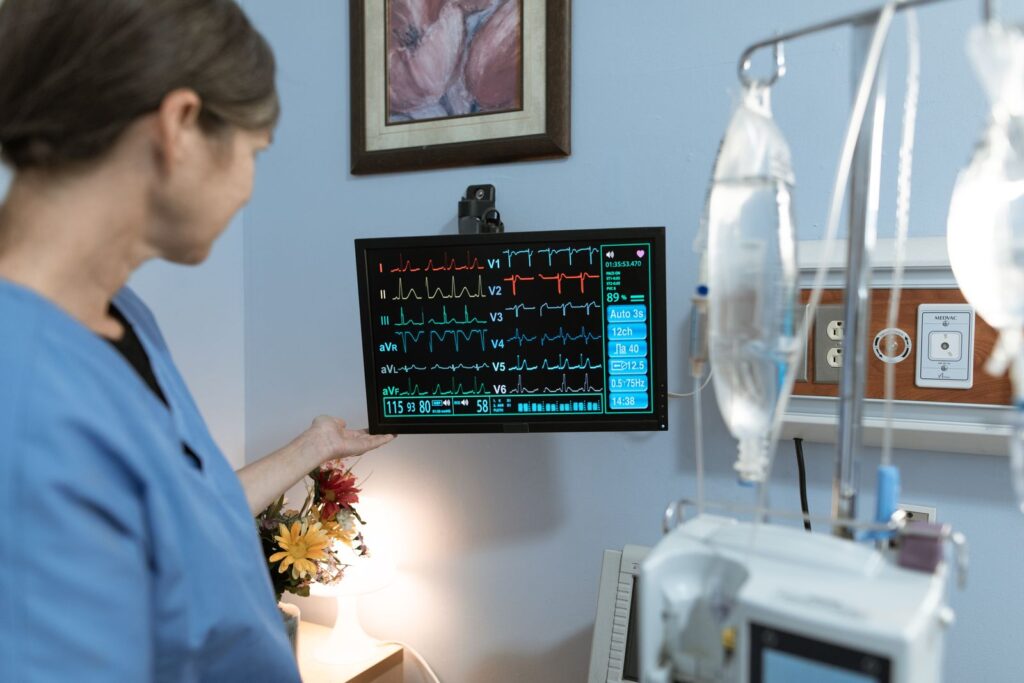
    Nurse in blue scrubs checking a monitor beside clear IV fluid bags
    Photo: RDNE Stock project / Pexels

    A drip places a needle and cannula directly into a vein, so hygiene, training and good judgement really matter. This guide explains what a safe provider looks like, the questions to ask anyone before you book, and the warning signs that mean you should say no.

    What are the real risks of an IV drip?

    For a healthy adult, a well-run wellness drip carries a low risk, but it is never zero. The main risks are:

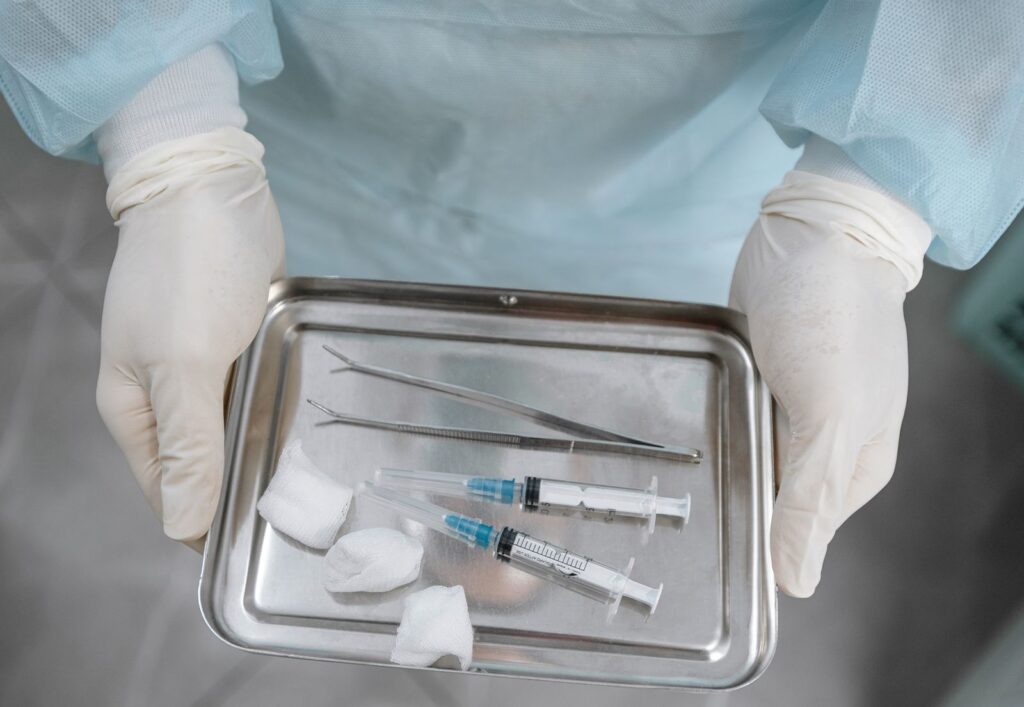
    Gloved hands holding a steel tray of sterile medical supplies
    Photo: SHVETS production / Pexels
    • Infection if equipment is not sterile or the skin is not cleaned properly.
    • Bruising, swelling or pain where the cannula goes in, or fluid leaking into the surrounding tissue.
    • Allergic reactions to an ingredient.
    • Fluid overload in people whose heart or kidneys cannot handle extra fluid.
    • Fainting, particularly in people who are nervous about needles.

    Almost all of these are reduced by proper training, a careful health check and clean technique. That is why the provider matters far more than the menu.

    It is also worth knowing that most healthy people who are only mildly dehydrated can rehydrate perfectly well by drinking water and oral rehydration salts. A drip is a convenience and a way to rest, not a necessity, so there is never a reason to accept one from a provider you do not feel comfortable with.

    What does a safe IV drip provider look like?

    Whether you are on Koh Lanta, in Bangkok or anywhere else, a safe provider should tick every one of these boxes:

    Smiling nurse in blue scrubs with a stethoscope
    Photo: Mix and Match Studio / Pexels

    A qualified, registered professional

    The drip should be placed and monitored by a registered nurse or doctor, not a spa attendant or someone with only informal training. They should be happy to tell you their qualifications.

    A health check before anything starts

    Expect questions about your medical history, medicines, allergies, pregnancy and how you are feeling today, plus basic checks such as blood pressure and pulse. If nobody asks you anything before reaching for a needle, that is a problem.

    Sterile, single-use equipment

    Needles, cannulas, giving sets and fluid bags should be opened from sealed packaging in front of you and never reused. The nurse should clean their hands and your skin before starting.

    Products from licensed suppliers

    Fluids and vitamins should come from licensed pharmaceutical suppliers, in clearly labelled, in-date packaging. You are entitled to ask to see the labels.

    Someone who stays with you

    The nurse should stay for the whole drip, watch for any reaction, and remove the cannula safely at the end. You should never be left alone with a running drip.

    What questions should you ask before booking?

    A professional provider will welcome these questions. Vague or defensive answers are a reason to look elsewhere.

    Woman relaxing on a sofa while talking on the phone
    Photo: Kampus Production / Pexels
    1. Who will give the drip, and what are their qualifications?
    2. What health checks do you do before starting?
    3. Exactly what is in this drip, and in what amounts?
    4. Where do your fluids and vitamins come from?
    5. Is all equipment sterile and single-use?
    6. Will the nurse stay with me for the whole drip?
    7. What happens if I have a reaction?

    Koh Lanta tip: On Koh Lanta, the government hospital is near Lanta Old Town on the east coast, and larger hospitals are in Krabi Town on the mainland. A good home-visit provider should be able to tell you clearly what they would do and where they would send you if something went wrong.

    Who should not have an IV drip?

    A wellness drip is not suitable for everyone. Speak to a doctor rather than booking if you:

    Close-up of a blood pressure cuff being fitted on an arm
    Photo: Thirdman / Pexels
    • Have heart failure, kidney disease or are on a fluid restriction.
    • Are pregnant or breastfeeding, unless your own doctor has advised it.
    • Have a fever, chest pain, severe abdominal pain, confusion or signs of a serious illness.
    • Have had a reaction to an IV drip or its ingredients before.
    • Take medicines that could interact with the ingredients, such as blood thinners, unless checked by a doctor.

    Competitive athletes should also check anti-doping rules, as some sporting bodies limit IV infusions.

    Red flags: when to walk away

    Trust your instincts. Say no and look elsewhere if you notice any of the following:

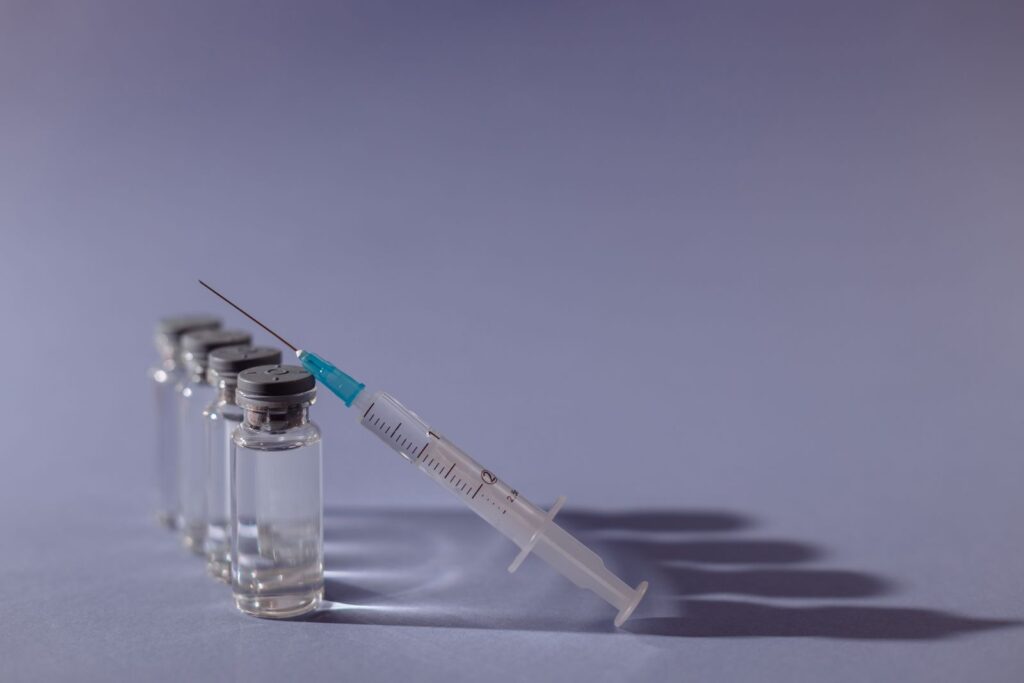
    Small medicine vials and a syringe on a grey surface
    Photo: Thirdman / Pexels
    • No health questions or checks before starting.
    • Equipment that is already unwrapped, or bags without clear labels.
    • Promises that a drip will cure an illness, detox your body, prevent sickness or make you lose weight.
    • Offers of skin whitening drips.
    • Pressure to add extras or book a long course on the spot.
    • The person giving the drip planning to leave you alone with it running.

    When to get medical help

    When to get medical help: during or after any drip, call 1669 (Thailand emergency ambulance) or go to hospital straight away if you have difficulty breathing, chest pain, swelling of the face or throat, a widespread rash, confusion or you collapse. The same applies to high fever, severe pain or vomiting that will not stop, even if you have not had a drip. These need a doctor, not a wellness service.

    How we handle safety at IV Drip Koh Lanta

    Every drip we give follows the standards above. A registered nurse comes to your villa, hotel or bungalow, runs a health check first, uses sterile single-use equipment and stays with you for the 45–60 minutes the drip takes. If the nurse feels a drip is not right for you, or that you need a doctor, they will tell you honestly.

    You can read the step-by-step process on our how it works page, and our FAQ answers common questions about ingredients and suitability.

    Is it safe to get an IV drip in Thailand? The bottom line

    An IV drip can be a safe and relaxing option when it is given by a registered professional, with a proper health check, sterile equipment and quality products. Ask questions, expect clear answers, and remember that it is a wellness service, not a replacement for medical care.

    If you would like to talk it through before booking, message us on WhatsApp via our contact page.

    Frequently asked questions

    Who should give an IV drip?

    A registered nurse or doctor should place and monitor any IV drip. They should check your health first and stay with you throughout.

    Can I ask to see what is in my drip?

    Yes. A professional provider will show you the labelled, sealed fluids and vitamins and explain what each one is before starting.

    Is an IV drip safe if I have high blood pressure?

    It depends on your condition and medicines. Tell the nurse during the health check, and if you have heart or kidney problems, speak to your doctor first.

    Can an IV drip replace seeing a doctor?

    No. A wellness drip is not emergency or hospital care. Fever, chest pain, severe pain or confusion need a doctor or hospital.

  • Glutathione Drip Benefits: An Honest Guide

    Glutathione Drip Benefits: An Honest Guide

    Key takeaways

    • Glutathione is an antioxidant your body makes itself from three amino acids.
    • Claimed glutathione drip benefits include brighter-looking skin and feeling refreshed, but good-quality evidence is limited.
    • We do not offer or promote glutathione for skin whitening or lightening.
    • Pregnant or breastfeeding women, people with asthma and anyone with serious health conditions should speak to a doctor first.

    Walk past any clinic in a Thai tourist area and you will probably see glutathione advertised. It is one of the most talked-about ingredients in wellness drips across Asia, often with big promises attached. This guide looks honestly at glutathione drip benefits: what it is, why people choose it, what the science does and does not support, and who should avoid it.

    We would rather you made an informed choice than booked something because of a marketing claim.

    What is glutathione?

    Glutathione is a small molecule made inside your own cells from three amino acids: cysteine, glutamate and glycine. It acts as an antioxidant, which means it helps protect cells from damage caused by reactive molecules produced during normal metabolism.

    Glass vials and test tubes in a laboratory
    Photo: Artem Podrez / Pexels

    Your liver holds a large share of it, and it plays a part in how the body processes many substances. Levels naturally vary with age, diet, illness and lifestyle. That is a well-established piece of biology. Whether adding extra glutathione through a drip changes much for a healthy person is a different, and much less settled, question.

    What do people use a glutathione drip for?

    People choose glutathione drips for a range of reasons. The most common ones we hear are:

    Woman with clear skin smiling in soft natural light
    Photo: Min An / Pexels
    • Wanting to feel refreshed after a long journey, a busy stretch of travel or a few late nights.
    • Hoping their skin will look healthier or more even after time in the sun.
    • A general interest in antioxidants and wellness routines they may already follow at home.
    • Simply enjoying an hour of rest with a nurse looking after them at their villa.

    These are all reasonable personal choices. The important thing is to go in with realistic expectations about what the drip itself is likely to do.

    What does the evidence actually say?

    Honestly, not as much as the adverts suggest. Research on glutathione given by drip is limited, and much of it involves small numbers of people or short follow-up periods. There is not strong evidence that it gives healthy people a visible glow, slows ageing or protects against illness.

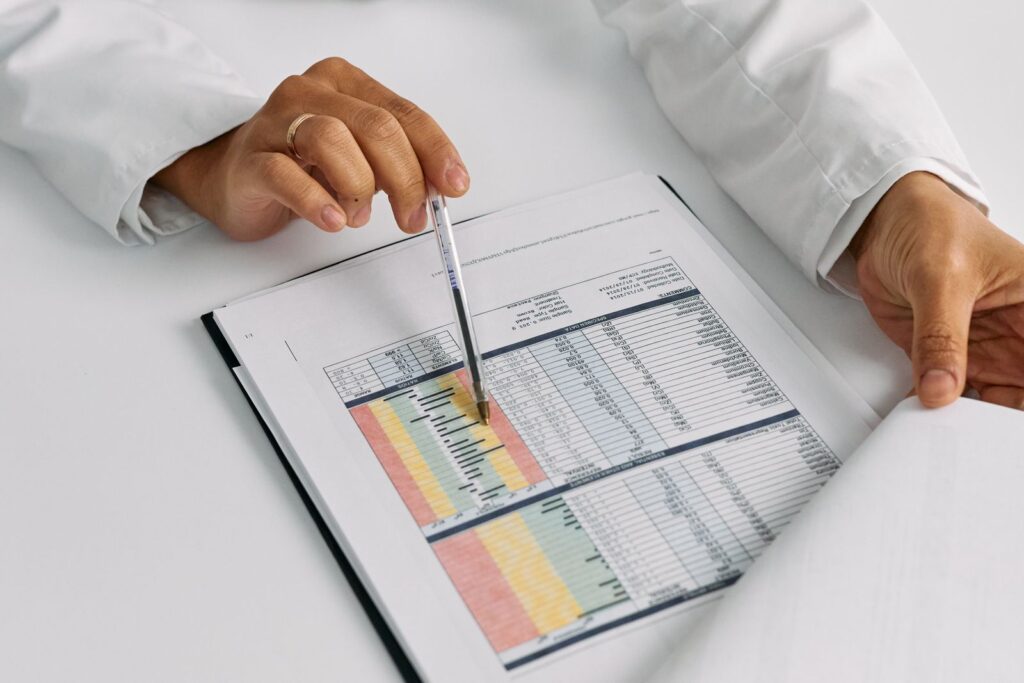
    Hand pointing a pen at a printed medical chart
    Photo: cottonbro studio / Pexels

    Much of the online excitement comes from its use for skin lightening. We do not support this. Skin whitening is not a health goal, the evidence is weak, and there are safety concerns about high, repeated doses given for that purpose. We do not offer, advertise or encourage glutathione for whitening or lightening skin, and we would not want anyone to book with that hope.

    What a drip can reliably do is give you fluids, which can help you rehydrate in the heat. Many guests tell us they feel better after resting and rehydrating, and that is a fair, modest thing to expect.

    It is also worth remembering that your body makes glutathione constantly. Eating well, sleeping enough, limiting alcohol and not smoking all support your own natural processes, and none of them cost anything extra. A drip, at best, sits alongside those basics rather than replacing them.

    Is a glutathione drip safe?

    For most healthy adults, a single drip given by a registered nurse after a proper health check is generally well tolerated. Like any IV treatment, though, it carries some risks:

    Nurse in scrubs putting on blue gloves
    Photo: Laura James / Pexels
    • Bruising, soreness or, rarely, infection where the cannula goes in.
    • Allergic reactions to any ingredient, which is why your history is checked first.
    • Possible breathing problems in some people with asthma.
    • Unknown effects of frequent or high-dose use over long periods.

    This is why who gives the drip matters as much as what is in it. Our guide on whether it is safe to get an IV drip in Thailand explains what to look for in any provider, from sterile single-use equipment to licensed suppliers.

    How our Beauty Glow drip fits in

    Our Beauty Glow drip contains glutathione, vitamin C and biotin with fluids. We describe it as a relaxing way to rehydrate and top up vitamins while you rest, not as a skin treatment with guaranteed results.

    A registered nurse comes to your villa, hotel or bungalow anywhere on Koh Lanta, runs a health check, and stays with you for the 45–60 minutes the drip takes. If they have any doubts about your suitability, they will say so.

    IV drip on Koh Lanta

    Beauty Glow IV drip

    A glutathione and vitamin C treat for skin that has had too much sun and travel. A registered nurse comes to your villa, hotel or bungalow anywhere on Koh Lanta.

    Who should avoid glutathione?

    Do not book a glutathione drip, or speak to your own doctor first, if any of these apply to you:

    Pregnant woman resting her hands on her belly
    Photo: Amina Filkins / Pexels
    • You are pregnant, trying to conceive or breastfeeding.
    • You have asthma or other breathing problems.
    • You have kidney, liver or heart disease, or are receiving cancer treatment.
    • You have had a reaction to an IV drip or any of its ingredients before.
    • You are under 18.

    Please be open with the nurse during your health check. They may suggest a different drip, a smaller dose or no drip at all, and that is always the right call if it keeps you safe.

    Simple ways to look after your skin on holiday

    Whether or not you choose a drip, these habits will do far more for your skin in the tropics:

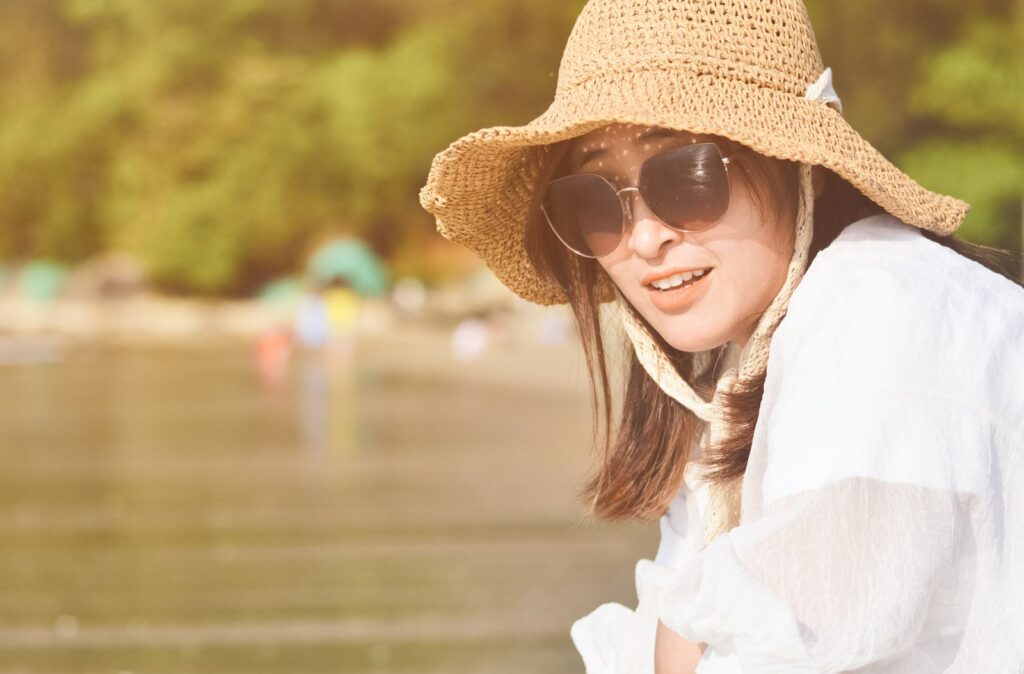
    Woman in a straw hat and sunglasses outdoors
    Photo: Hiếu Lê / Pexels
    • Wear sunscreen every day and reapply after swimming, plus a hat and shade at midday.
    • Drink water steadily through the day, more in the hot season from around March to May.
    • Eat plenty of fruit and vegetables; Thai markets make this easy.
    • Rinse off salt water and sand, then use a simple moisturiser.
    • Get enough sleep, and go easy on alcohol, which dehydrates you.

    If you have already caught too much sun, our sunburn recovery guide walks you through what to do.

    When to get medical help

    When to get medical help: stop and get help straight away if you develop wheezing, difficulty breathing, swelling of the face or lips, a widespread rash or feel faint during or after any drip. Call 1669 (Thailand emergency ambulance) for these red-flag symptoms or go to the nearest hospital. Koh Lanta Hospital is near Lanta Old Town, with larger hospitals in Krabi Town.

    The honest verdict

    Glutathione is a real and important molecule in your body, but the evidence for dramatic benefits from a drip is limited. If you enjoy a relaxing hour of rehydration with a nurse on hand and you have no reason to avoid it, it can be a pleasant part of your stay. If anyone promises whiter skin or guaranteed results, treat that as a warning sign.

    Questions before you decide? Message us on WhatsApp via the contact page.

    Frequently asked questions

    Does a glutathione drip lighten skin?

    We do not offer or promote glutathione for skin lightening. The evidence is weak, and there are safety concerns about high, repeated doses given for that purpose.

    How long does a glutathione drip take?

    Our Beauty Glow drip usually takes 45–60 minutes, including a short health check by the nurse beforehand.

    Can I have a glutathione drip if I am pregnant?

    No. Pregnant or breastfeeding women should not have a glutathione drip, and should speak to their own doctor about any supplements.

    Will I notice a difference after one drip?

    Many guests say they feel refreshed after resting and rehydrating. Visible skin changes from a single drip are not something we can promise, as the evidence is limited.

  • Skin Care After Sunburn in Thailand: A Practical Guide

    Skin Care After Sunburn in Thailand: A Practical Guide

    Key takeaways

    • Good skin care after sunburn in Thailand starts with cooling the skin, drinking plenty of fluids and staying out of the sun.
    • Aloe vera gel, loose cotton clothing and simple fragrance-free moisturiser help; avoid popping blisters.
    • Blistering over a large area, fever, chills, confusion or vomiting need a doctor, not home care.
    • Prevention is easier than recovery: shade between late morning and mid-afternoon, a hat, and generous reef-friendly sunscreen.

    It happens to almost everyone at some point. You spend a perfect afternoon on Long Beach or out on a boat trip, and by evening your shoulders are glowing pink and hot to the touch. Good skin care after sunburn in Thailand is mostly about simple, sensible steps, taken early.

    This guide covers what to do in the first few hours, how to look after your skin over the next few days, when sunburn becomes a medical problem, and how to avoid a repeat for the rest of your holiday.

    Why does sunburn happen so fast in Thailand?

    Thailand sits close to the equator, so the sun is high in the sky for much of the day and its ultraviolet (UV) rays are strong all year round. Even on hazy or cloudy days, UV still reaches your skin.

    Palm trees on a tropical beach under a bright sun
    Photo: Pixabay / Pexels

    On Koh Lanta, a few things make it easier to burn without noticing. Sea breezes keep you feeling cool, water and pale sand reflect light back at you, and swimming washes off sunscreen. Many visitors also arrive from a northern winter with skin that has not seen strong sun for months.

    What should you do in the first few hours?

    As soon as you notice redness or heat, get out of the sun. Sunburn usually keeps developing for several hours after exposure, so the real damage often shows later that evening or the next morning.

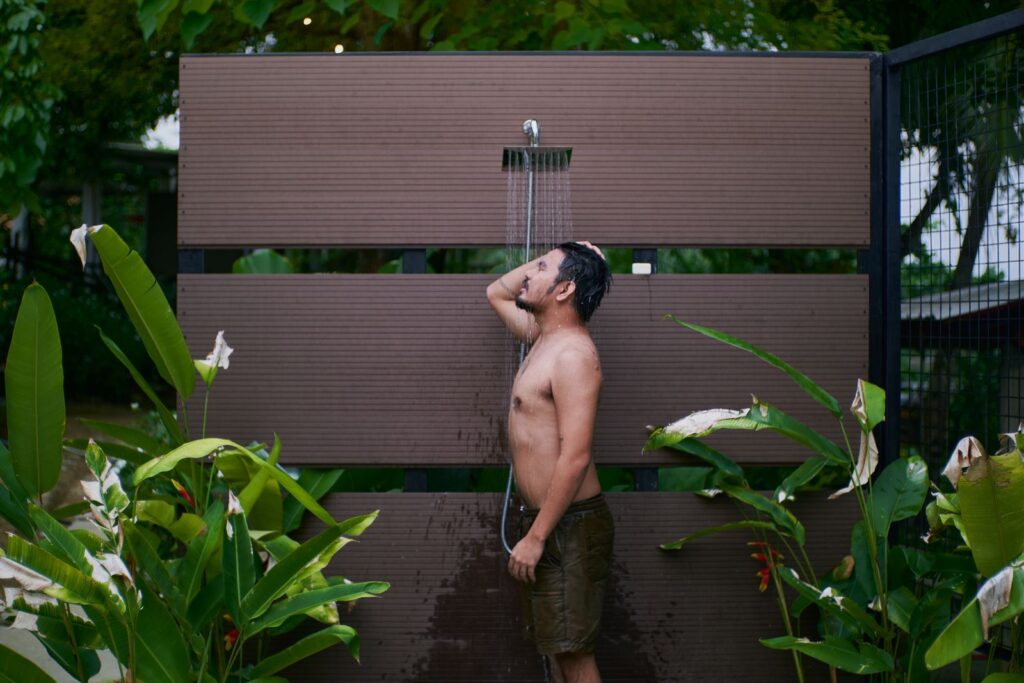
    Man rinsing off under an outdoor shower among tropical plants
    Photo: Jeff Vinluan / Pexels
    1. Cool the skin. Take a cool (not icy) shower or apply a damp cloth for ten to fifteen minutes. Do not put ice directly on burnt skin.
    2. Drink water. Sunburn draws fluid to the skin and the heat makes you sweat, so sip water steadily through the evening.
    3. Apply a soothing gel. Plain aloe vera gel or a light, fragrance-free moisturiser can make skin feel more comfortable.
    4. Wear loose cotton. Tight straps and synthetic fabrics rub on sore skin.
    5. Consider simple pain relief. A pharmacist can advise on over-the-counter painkillers that suit you, especially if you take other medicines.

    Koh Lanta tip: Aloe vera gel, after-sun lotion and oral rehydration salts are easy to find in pharmacies in Saladan and along the main west-coast road. Ask the pharmacist for a plain gel without added alcohol or strong fragrance, which can sting burnt skin.

    How should you care for sunburnt skin over the next few days?

    Sunburnt skin is damaged skin, and it needs time to repair. For the next few days, treat it gently and keep it covered when you go outside.

    Hands holding freshly cut aloe vera leaves
    Photo: ROCKETMANN TEAM / Pexels
    • Keep moisturising with a simple, unperfumed product, especially after showers.
    • Leave blisters alone. They protect the skin underneath; if one breaks, keep the area clean and covered with a light dressing.
    • Avoid hot showers, scrubs, harsh soaps and anything containing alcohol on the burnt area.
    • Skip butter, oils, toothpaste and other home remedies, which can trap heat or irritate the skin.
    • Stay out of direct sun until the redness has settled. If you go out, cover up with clothing rather than relying on sunscreen alone.

    Peeling is normal after a moderate burn. Resist the urge to pull loose skin away, as the new skin underneath is thin and sensitive. Keep moisturising and let it come away on its own.

    Hydration matters more than you think

    Sunburn and dehydration often go hand in hand. A long day in the heat, a few cold beers at a sunset beach bar and not much water can leave you headachy, tired and thirsty on top of the burn.

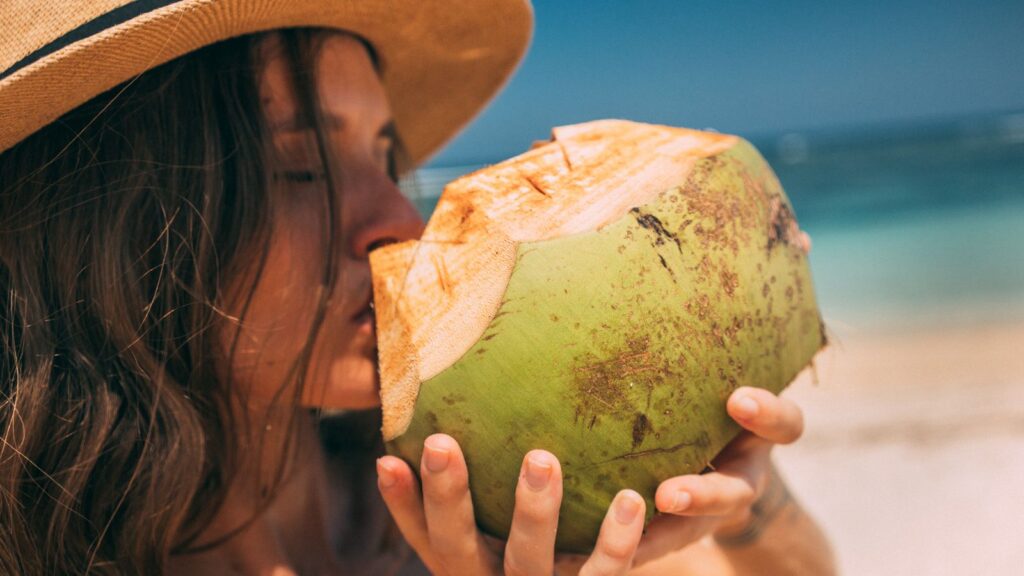
    Woman in a sun hat drinking from a fresh coconut
    Photo: Mikhail Nilov / Pexels

    Drink water regularly, and if you have been sweating a lot, add an oral rehydration sachet to replace lost salts. Pale yellow urine is a good sign you are drinking enough. Dark urine, a dry mouth and dizziness suggest you need more fluids. Our guide to dehydration in Thailand explains the signs in more detail.

    Can an IV drip help after too much sun?

    An IV drip does not heal sunburn, and it is not a substitute for cooling, covering up and resting. What it can do is help you rehydrate if the sun has left you feeling drained, and top up fluids and vitamins while you recover.

    Our Beauty Glow drip combines fluids with vitamin C, biotin and glutathione. Many guests simply enjoy lying down in the shade of their villa for an hour while a registered nurse takes care of everything. We are honest about the skin side: the evidence that glutathione or vitamins in a drip give a visible glow is limited, and we never offer or promote it for skin whitening.

    Before any drip, the nurse runs a health check. If your sunburn is severe or you have signs of heat illness, they will tell you to see a doctor instead. If dehydration is the main issue, the Hydration Boost drip may be the better fit.

    IV drip on Koh Lanta

    Beauty Glow IV drip

    A glutathione and vitamin C treat for skin that has had too much sun and travel. A registered nurse comes to your villa, hotel or bungalow anywhere on Koh Lanta.

    When does sunburn need a doctor?

    Most sunburn settles with home care within a week. Some burns, though, are more serious, and sunburn can come with heat exhaustion or heatstroke.

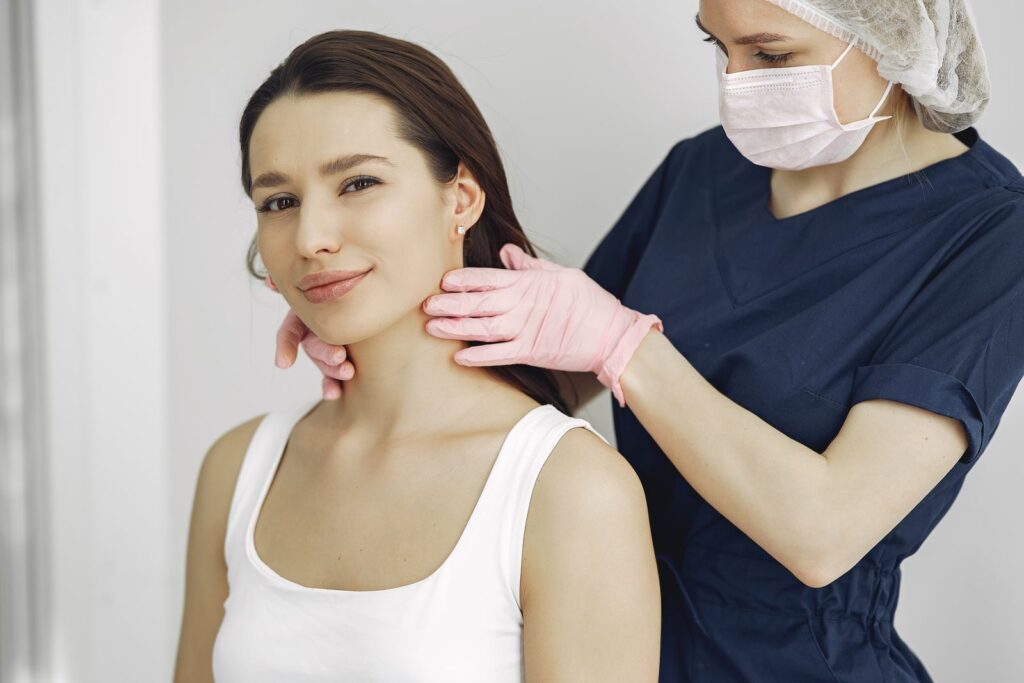
    Skin specialist examining a woman's face and neck
    Photo: Gustavo Fring / Pexels

    When to get medical help

    When to get medical help: see a doctor if blisters cover a large area, the pain is severe, the skin looks infected (spreading redness, pus, increasing swelling), or you have a fever, chills, headache or nausea. Call 1669 (Thailand emergency ambulance) or go straight to hospital if someone is confused, faints, stops sweating with hot skin, has a seizure, or cannot keep fluids down. Koh Lanta Hospital is near Lanta Old Town on the east coast, and larger hospitals are in Krabi Town on the mainland.

    Babies and young children burn more easily and can become unwell quickly, so get a burnt child checked sooner rather than later. The same goes for anyone taking medicines that make skin more sensitive to light; a pharmacist or doctor can tell you whether yours do.

    How can you avoid getting burnt again?

    Once you have burnt, your skin is more vulnerable for the rest of the trip. A few habits make a big difference:

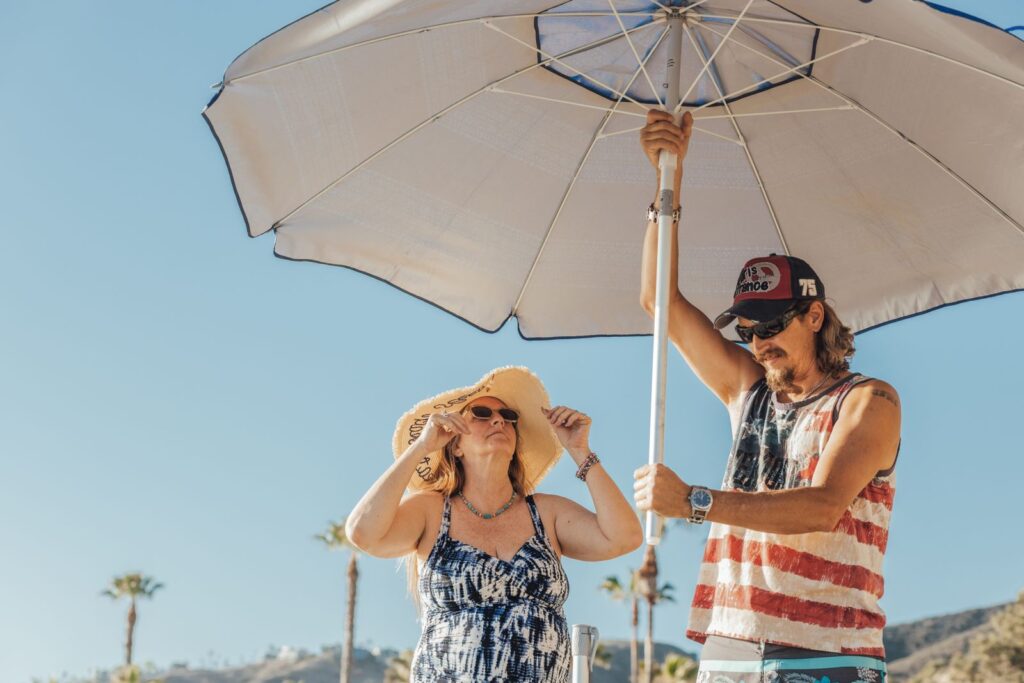
    Woman in a sun hat standing in the shade of a beach umbrella
    Photo: Kindel Media / Pexels
    • Avoid the midday sun. Plan beach time and boat trips for the morning and late afternoon, and rest in the shade in between.
    • Use enough sunscreen. Apply generously 15–20 minutes before going out, and reapply every two hours and after swimming or towelling off.
    • Choose reef-friendly sunscreen. Look for mineral formulas, which are kinder to the corals you will see snorkelling and diving.
    • Cover up. A wide-brimmed hat, sunglasses and a long-sleeved rash vest for snorkelling protect better than any lotion.
    • Watch the hidden spots. Tops of feet, backs of knees, ears and the parting in your hair burn easily.

    Koh Lanta tip: Hiring a scooter? Your forearms, hands and the fronts of your thighs get hours of direct sun while the breeze keeps you feeling cool. Cover up or apply sunscreen before setting off for Kantiang Bay or Lanta Old Town.

    Skin care after sunburn in Thailand: the bottom line

    Cool the skin, drink plenty, moisturise gently and stay out of the sun while it heals. Know the warning signs that mean a doctor is needed, and do not hesitate to get help if they appear.

    If you would like to rest and rehydrate at your accommodation while you recover, you can message us on WhatsApp via our contact page.

    Frequently asked questions

    How long does sunburn take to heal?

    Mild sunburn usually settles in three to five days. A moderate burn with peeling can take around a week, while severe blistering burns may take longer and should be checked by a doctor.

    Is aloe vera good for sunburn?

    Plain aloe vera gel can feel cooling and soothing on sunburnt skin. Choose one without added alcohol or strong fragrance, and stop using it if it stings or causes a rash.

    Can I swim in the sea with sunburn?

    It is best to give badly burnt skin a break from sun and salt water. If you do swim, cover the burnt area with a rash vest and avoid the middle of the day.

    Can an IV drip help with sunburn?

    An IV drip does not heal sunburn, but it can help you rehydrate if you feel drained after too much sun. A nurse checks you first, and severe sunburn or signs of heat illness need a doctor.

  • Diving Dehydration Tips for Koh Lanta Dive Trips

    Diving Dehydration Tips for Koh Lanta Dive Trips

    Key takeaways

    • Start hydrating the day before a dive trip, not on the boat.
    • Diving with a hangover is a bad idea: skip the heavy night before.
    • If you want an IV drip, book it after your diving, and check with your dive centre or a doctor if unsure.
    • Any unusual symptoms after diving need medical advice, not a drip.

    Koh Lanta is a brilliant base for diving, with popular trips to Koh Haa and Hin Daeng / Hin Muang in the Andaman Sea. Dive days are long, though, and it is easy to come home more drained than you expected. These diving dehydration tips will help you feel better on the boat and afterwards.

    Staying well hydrated is one of the simplest things divers can do to look after themselves. It will not guarantee anything, but it helps you feel more comfortable, think more clearly and recover better.

    Why do divers get dehydrated?

    Several things combine on a typical dive day:

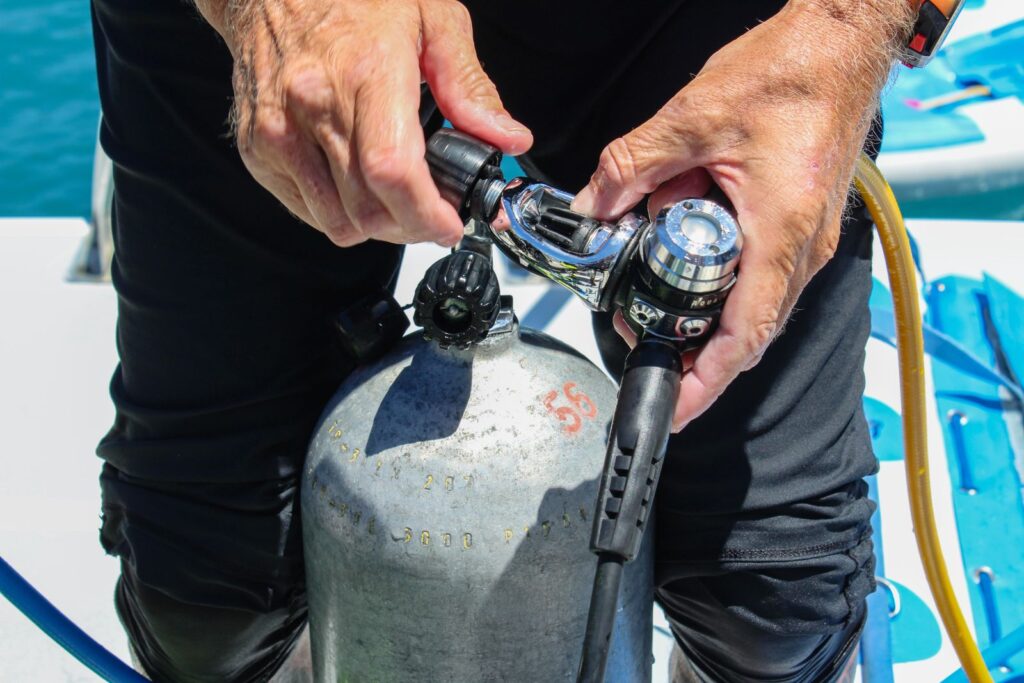
    Hands fitting a regulator onto a scuba tank
    Photo: Manuel Enrique Sankitts 🌹 / Pexels
    • Dry air. The air in a scuba tank is very dry, and you lose moisture with every breath underwater.
    • Immersion. Being in water tends to make your body produce more urine, so you lose fluid during the dive.
    • Sun and heat. Time on the boat between dives, often in strong sun, makes you sweat.
    • Seasickness. Feeling queasy can put you off drinking and eating.
    • Early starts. It is easy to skip breakfast and water when rushing to the pier.

    Dehydration is also widely seen as one of the factors that may raise the risk of decompression illness, which is another good reason to take fluids seriously.

    How to hydrate before a dive trip

    Good hydration starts the day before, not on the boat. Try this:

    Woman drinking water from a bottle on a tree-lined path
    Photo: Vitaly Gariev / Pexels
    1. Drink water steadily through the day before your trip.
    2. Eat a proper evening meal with some salt.
    3. Keep alcohol light or skip it altogether.
    4. Get a good night’s sleep.
    5. In the morning, have a glass of water and a light breakfast before you leave.

    Pale straw-coloured urine before you set off is a good sign you are in decent shape.

    Why don’t hangovers and diving mix?

    It is tempting to enjoy the sunset bars on Long Beach the night before a trip. But alcohol is a diuretic, so you start the day already low on fluids. A hangover can also bring nausea, headaches and slower thinking, none of which you want at depth.

    Alcohol can affect your judgement and coordination for longer than you might think. The kindest thing you can do for your dive day is to keep the night before quiet. If you do wake up feeling rough, talk honestly to your dive centre about whether to dive. Sitting a dive out is always the safer choice when in doubt.

    Koh Lanta tip: Many dive trips from Koh Lanta leave early. If you are staying near the bars of Long Beach, plan a quiet night before your trip and save the celebrations for after your last dive.

    Staying hydrated on the dive boat

    • Bring your own refillable bottle and drink between dives, even if you do not feel thirsty.
    • Add oral rehydration salts, available from pharmacies in Saladan, if it is very hot or you sweat a lot.
    • Stay in the shade on the boat and cover up between dives.
    • Eat the snacks and lunch offered; food helps you hold on to fluid.
    • Go easy on coffee and fizzy drinks.
    People on the deck of a boat on a deep blue sea
    Photo: Vadim Braydov / Pexels

    If you feel seasick, small regular sips are easier than large gulps. Tell the crew if you are struggling.

    After your last dive

    The trip back to the pier is a good time to keep sipping. Once you are home, have a proper meal, a cool shower and a rest in the shade or air conditioning. Keep drinking through the evening, and if you plan a drink at sunset, alternate it with water. Check your urine colour again before bed. If you are diving again the next day, an early night will help far more than anything else.

    Can you dive after an IV drip?

    This is a common question, and the safest answer is to schedule your drip after diving rather than before. That way it fits around your dive plans rather than the other way round.

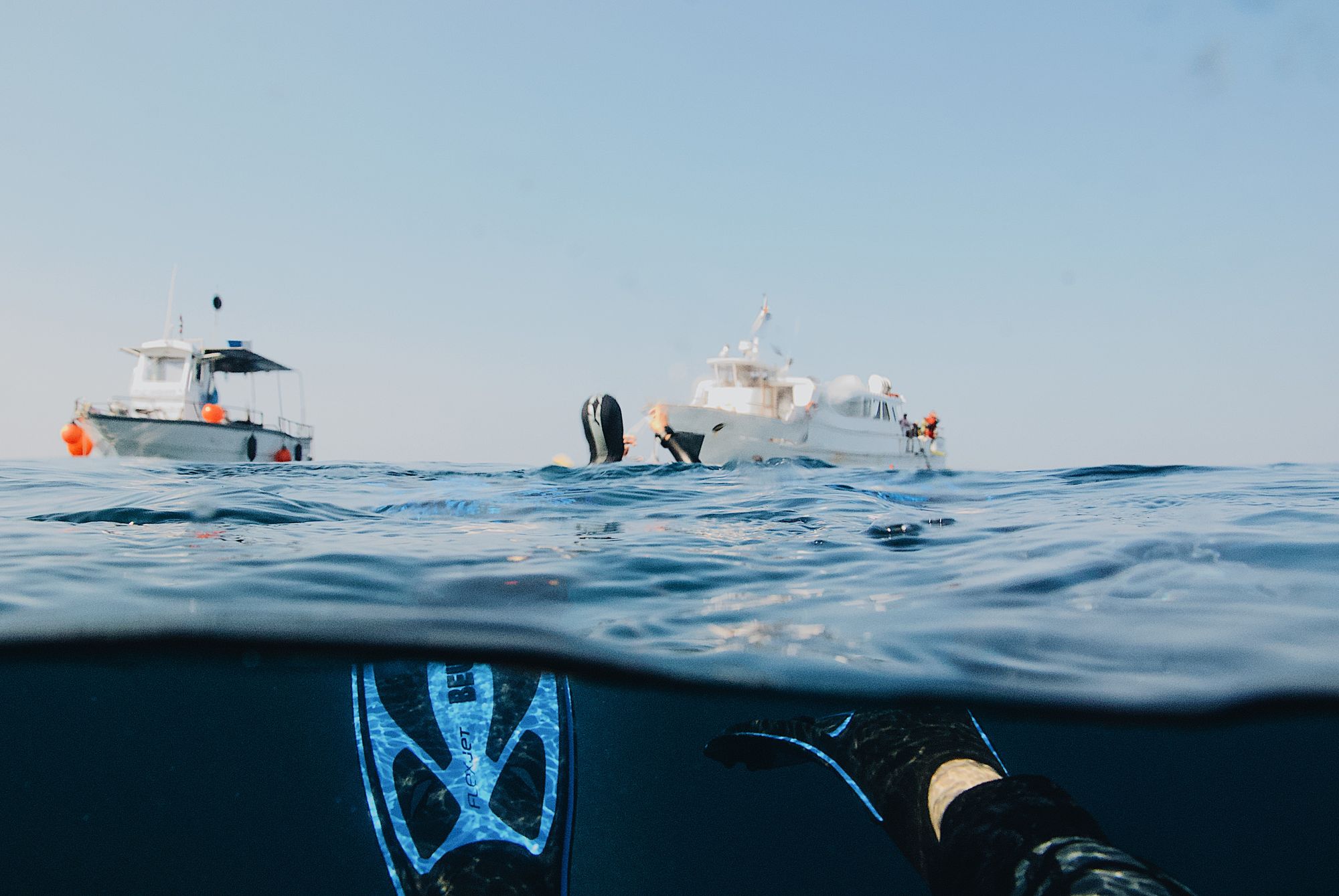
    Scuba diver surfacing beside a boat
    Photo: Maël BALLAND / Pexels

    If you are considering a drip before a dive, check with your dive centre and, ideally, a doctor familiar with diving medicine first. Our nurse will also ask about your diving plans during the health check. A drip should never be used to make someone feel well enough to dive when they would otherwise sit it out.
    How can a Dive & Active Recovery drip help?

    After a long day on the water, many divers simply want to rest. Our Dive & Active Recovery drip contains amino acids, magnesium, B complex vitamins and fluids. It can help you rehydrate and top up some nutrients while you lie down at your villa or hotel.

    A registered nurse comes to you, runs a health check and stays for around 45 to 60 minutes. It works alongside, not instead of, drinking water, eating well and resting. If you are on a multi-day dive trip, you can also read about group bookings for your buddies.

    IV drip on Koh Lanta

    Dive & Active Recovery IV drip

    Recover between dive days, training sessions and big adventures. A registered nurse comes to your villa, hotel or bungalow anywhere on Koh Lanta.

    When is it more than tiredness?

    Feeling tired and a bit thirsty after diving is normal. But some symptoms may point to decompression illness or another problem and need urgent medical help, not an IV drip.

    Diver in a wetsuit and mask sitting on the edge of a boat
    Photo: Kindel Media / Pexels

    When to get medical help

    When to get medical help. After diving, take seriously any joint or limb pain, unusual tiredness, numbness, tingling, weakness, skin rash or itching, dizziness, confusion, breathing difficulty, chest pain or trouble speaking or seeing. Tell your dive centre straight away, call 1669 for an ambulance and go to hospital. Tell the medical team you have been diving. Koh Lanta Hospital is near Lanta Old Town, and larger hospitals are in Krabi Town.

    Diving dehydration tips: a simple dive-day checklist

    To sum up, here is a quick routine to follow for every dive day on Koh Lanta:

    Diving mask and fins lying on the sand
    Photo: Fia by Marv / Pexels
    • Quiet night, plenty of water and a proper meal the day before.
    • Water and breakfast before you leave for the pier.
    • Regular sips and some electrolytes between dives.
    • Shade, a hat and cover-up on the boat.
    • Rest, food and fluids after you get back, with an optional recovery drip if it suits you.
    • Follow your dive centre’s guidance on flying after diving.

    If you would like to book a recovery drip after your dive trip, message us on WhatsApp and let us know your diving schedule.

    Frequently asked questions

    Can I have an IV drip before diving?

    We recommend scheduling your drip after diving. If you are considering one before, check with your dive centre and a doctor familiar with diving medicine first.
    Is it safe to dive with a hangover?

    It is not a good idea. Alcohol leaves you dehydrated and can affect judgement and coordination, so if in doubt, sit the dive out.

    How much water should divers drink?

    There is no single figure. Drink steadily the day before and between dives, and aim for pale straw-coloured urine.

    What is in the Dive & Active Recovery drip?

    It contains amino acids, magnesium, B complex vitamins and fluids, given by a registered nurse after a health check.

  • Muay Thai Training Recovery in Thailand: A Practical Guide

    Muay Thai Training Recovery in Thailand: A Practical Guide

    Key takeaways

    • Training in tropical heat means large sweat losses: replace fluids and salts after every session.
    • Sleep, food and planned rest days matter as much as the training itself.
    • Ease in during your first week while your body adjusts to the heat.
    • Competitive athletes: check anti-doping rules before having any IV infusion.

    Many visitors come to Koh Lanta to train at one of the island’s Muay Thai gyms. It is a fantastic way to get fit, but training twice a day in tropical heat is a very different challenge from a session at home. Good Muay Thai training recovery in Thailand is what keeps you on the pads all week rather than flat on your bed.

    This guide covers the basics: heat, sweat, sleep, food and rest. None of it needs anything special, and it works whether you are here for a week or a season.

    Why is training in the heat so demanding?

    When you exercise hard, your body produces heat. In a cool climate, sweat evaporates easily and keeps you cool. In the humid heat of the Andaman coast, sweat evaporates more slowly, so your body works harder and you sweat more.

    Boxer wiping sweat with a towel in the ring
    Photo: Ron Lach / Pexels

    That sweat carries away water and salts such as sodium. Lose too much without replacing it and you may feel dizzy, cramp up, get headaches or find your performance dropping off. During the hot season, roughly March to May, this is even more noticeable.

    How much should you drink when training Muay Thai?

    There is no single right amount, because sweat rates vary widely between people. A practical approach is:

    Man sitting on a gym floor drinking from a water bottle
    Photo: Ivan S / Pexels
    • Arrive at training already hydrated, having sipped water through the day.
    • Take small drinks during breaks in the session.
    • Rehydrate steadily afterwards, rather than downing a huge amount at once.
    • Use oral rehydration salts or an electrolyte drink after long or very sweaty sessions.
    • Check your urine colour: pale straw is the aim.

    Weighing yourself before and after a session can give you a rough idea of how much fluid you lose, which helps you plan. Avoid drinking excessive amounts of plain water with no salt, as that can upset your sodium balance.

    Koh Lanta tip: Pharmacies in Saladan and along the main west-coast road sell oral rehydration salts. Keep a few sachets in your gym bag for after afternoon sessions, when the heat is at its strongest.

    Sleep: your most important recovery tool

    Sleep is when your body repairs muscle and restores energy. Training twice a day without enough sleep is a fast route to feeling run down.

    Man sleeping peacefully in a bed with white sheets
    Photo: Kampus Production / Pexels
    • Aim for a regular bedtime and wake time.
    • Keep your room cool and dark, using air conditioning or a fan.
    • A short nap between morning and afternoon sessions can help.
    • Go easy on late nights at the beach bars during heavy training weeks.

    What should you eat to recover from Muay Thai?

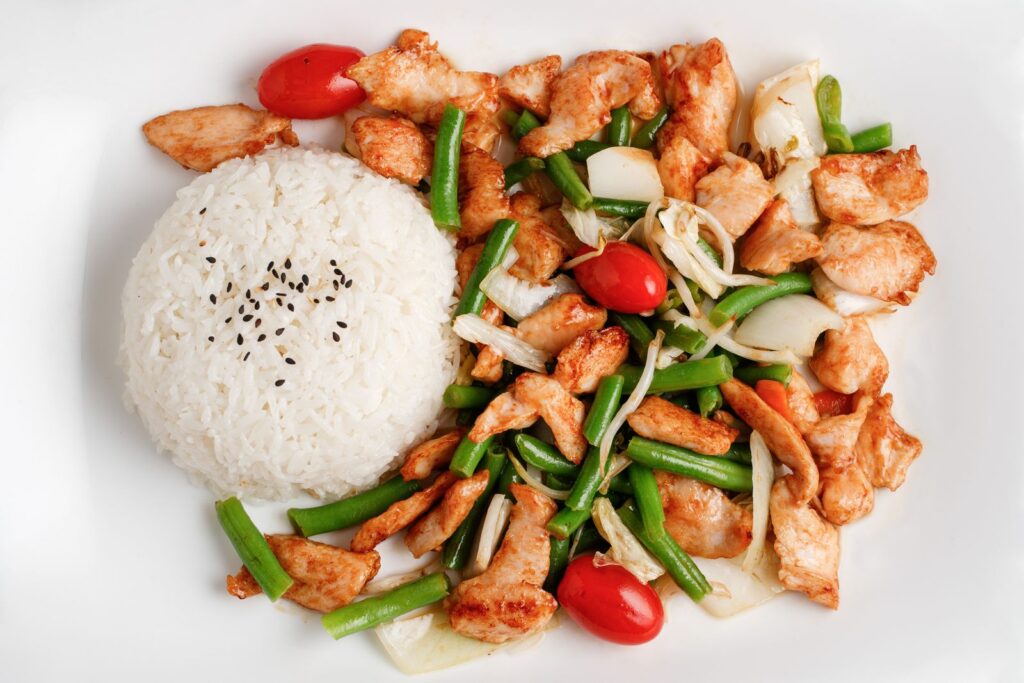
    Hard training needs fuel. Thai food can work very well for this, with plenty of rice, noodles, fruit, eggs, chicken, fish and soups.

    Plate of rice with chicken and vegetables
    Photo: Son Tung Tran / Pexels
    • Carbohydrates such as rice and fruit help refill your energy stores.
    • Protein from eggs, chicken, fish, tofu or beans supports muscle repair.
    • Salty foods such as soups and broths help replace sodium lost in sweat.
    • Water-rich fruit such as watermelon and pineapple adds fluid as well as energy.

    Try to eat something within a couple of hours of training, and do not skip meals to save time between sessions.

    If your appetite drops in the heat, smaller and more frequent meals are easier to manage. A fruit shake, a bowl of rice soup or some grilled chicken with sticky rice can all be eaten quickly between sessions. Be careful with very spicy food on heavy training days if it upsets your stomach, and keep up good food hygiene, as a stomach bug can wipe out several days of training.

    Why rest days matter

    It is tempting to train every day when you are on a training holiday. But muscles, joints and your nervous system all need time to recover. Without rest, you are more likely to pick up niggles, feel exhausted and lose motivation.

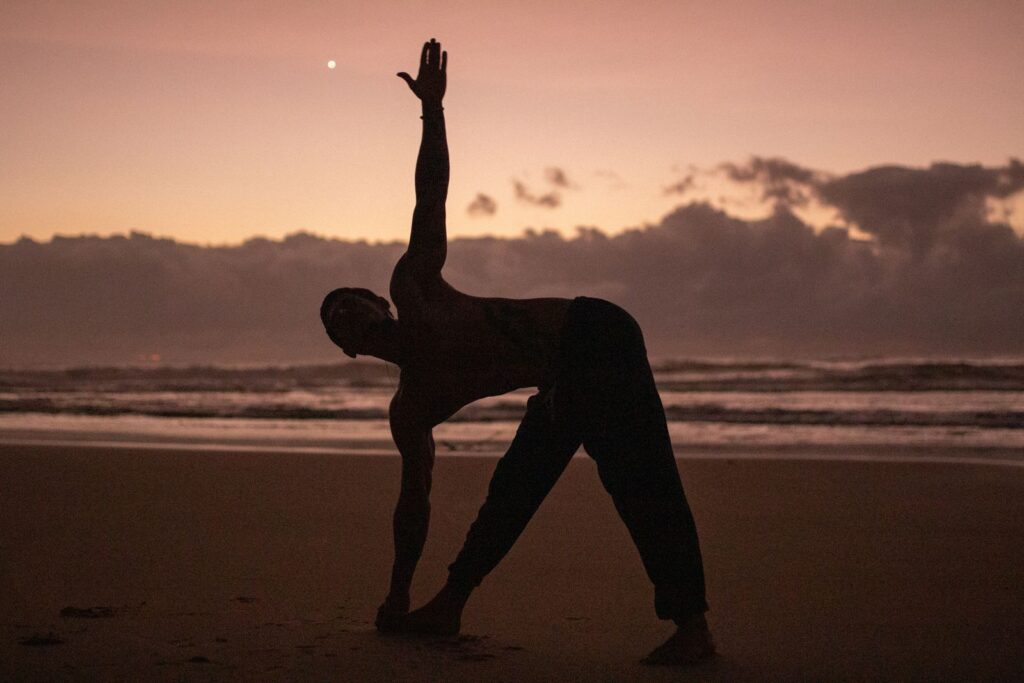
    Person in a yoga stretch silhouetted at sunset
    Photo: Lenita Tropical / Pexels

    Plan at least one full rest day a week, and listen to your body. A rest day on Koh Lanta could be a gentle swim, a walk around Lanta Old Town or simply an afternoon in a hammock. During your first few days, train at a lower intensity while your body adjusts to the heat.

    Can an IV drip help Muay Thai recovery?

    For most people, food, water, electrolytes, sleep and rest are all you need. Some people who are training hard in the heat like an occasional IV drip as a way to rehydrate and top up nutrients while resting.

    Our Dive & Active Recovery drip contains amino acids, magnesium, B complex vitamins and fluids. A registered nurse comes to your accommodation, runs a health check first and stays with you for around 45 to 60 minutes. It supports recovery alongside good habits; it does not replace them. You can find out more about the visit on our how it works page.

    An important note for competitive athletes

    If you compete in a sport that follows anti-doping rules, be careful. The World Anti-Doping Agency’s rules restrict IV infusions above a small volume unless they are given during hospital treatment or covered by an approved exemption, even when the drip contains nothing banned. Check with your federation or anti-doping organisation before having any IV infusion.

    IV drip on Koh Lanta

    Dive & Active Recovery IV drip

    Recover between dive days, training sessions and big adventures. A registered nurse comes to your villa, hotel or bungalow anywhere on Koh Lanta.

    Warning signs to take seriously

    Feeling tired and sore after training is normal. Some symptoms are not, and they need medical attention rather than more rest or a drip.

    Exhausted man sitting with his head in his hands in a dark gym
    Photo: Tima Miroshnichenko / Pexels

    When to get medical help

    When to get medical help. Stop training and get help for signs of heatstroke, such as confusion, collapse or very hot skin, and for chest pain, fainting, severe headache or vomiting after a blow to the head. Very dark or cola-coloured urine with severe muscle pain also needs urgent assessment. Call 1669 for an ambulance or go straight to hospital. Koh Lanta Hospital is near Lanta Old Town, and larger hospitals are in Krabi Town.

    Muay Thai training recovery in Thailand: your routine

    Arrive hydrated, sip during sessions, replace salts afterwards, eat well, sleep well and take proper rest days. Build up gradually in your first week and listen to your body. Those simple habits will do more for your training than anything else.

    If you would like to talk about a recovery drip during a heavy training block, message us on WhatsApp.

    Frequently asked questions

    How do I recover faster from Muay Thai training in Thailand?

    Focus on fluids and electrolytes, regular meals with carbohydrates and protein, good sleep and at least one full rest day a week.

    Can professional fighters have an IV drip?

    Anti-doping rules restrict IV infusions above a small volume outside hospital treatment. Competitive athletes should check with their federation or anti-doping organisation first.
    How should I adjust to training in the heat?

    Train at a lower intensity for the first few days, drink steadily through the day and use electrolytes after sweaty sessions.

    Is it normal to cramp when training in Thailand?

    Cramps can happen with heavy sweating and fatigue. Replace fluids and salts, rest and stretch, and seek advice if they are severe or frequent.

  • Jet Lag Thailand Tips: Your First 48 Hours on Koh Lanta

    Jet Lag Thailand Tips: Your First 48 Hours on Koh Lanta

    Key takeaways

    • Get morning daylight and stay up until a sensible local bedtime on day one.
    • Drink water steadily through the journey and go easy on alcohol on the plane.
    • Keep naps short, eat at local mealtimes and plan a gentle first 48 hours.
    • An Energy & Jet Lag drip is an optional top-up, not a substitute for sleep and light.

    Getting to Koh Lanta is part of the adventure, but it is a long one. If you are flying in from Europe or Australia, you may land feeling foggy, wide awake at 3am or ready to sleep at lunchtime. These jet lag Thailand tips are designed to help you reset your body clock quickly so you can enjoy the island rather than drift through it.

    Nothing here needs special equipment. Light, sleep, food and fluids do most of the work.

    Why does jet lag hit so hard on the way to Thailand?

    Jet lag happens when your internal body clock is out of step with local time. Your sleep, hunger, alertness and even digestion run on that clock, and it only shifts gradually. Crossing several time zones in one go leaves it lagging behind.

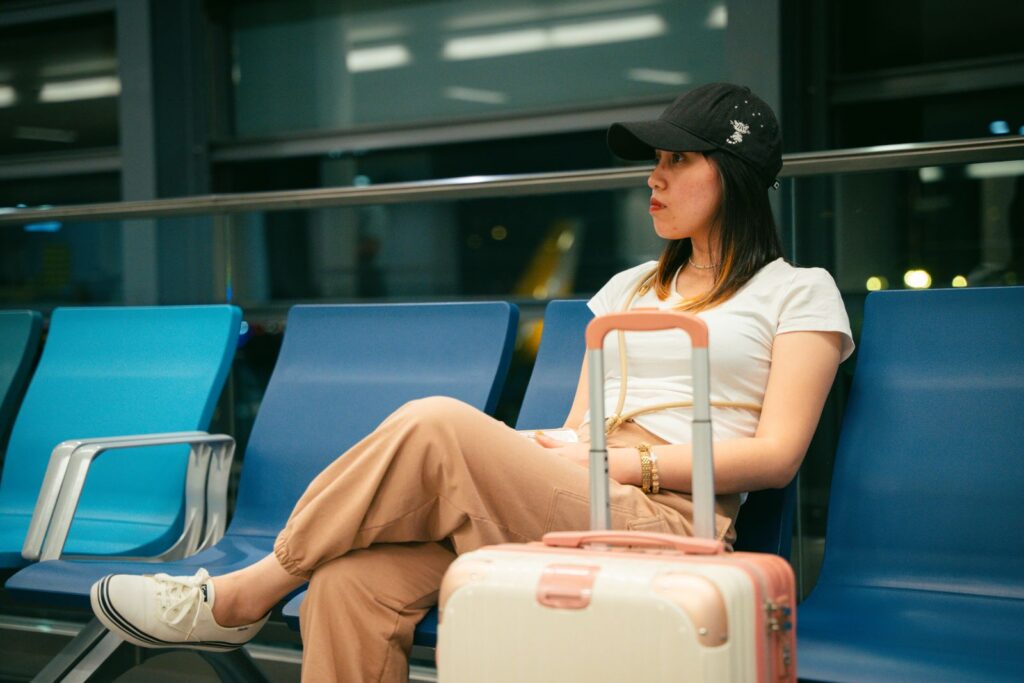
    Traveller waiting in an airport lounge with a suitcase
    Photo: Kenneth Surillo / Pexels

    Travellers from Europe usually fly east to Thailand, which many people find harder because you need to fall asleep earlier than your body expects. Australians cross fewer time zones, but a long day of travel still leaves people tired.

    On top of the time difference, the journey itself takes a toll. Dry cabin air, broken sleep, airport food and long periods of sitting all add to that drained feeling. Then you step into tropical heat and humidity.

    The journey to Koh Lanta: what to expect

    Most visitors arrive in Thailand on a long-haul flight, often with a connection, then fly on to Krabi. From Krabi, it is a road transfer down to the coast and a short car ferry across to the island. Many people arrive in Saladan, at the northern end, before heading on to their accommodation in Klong Dao, Long Beach, Kantiang Bay or elsewhere.

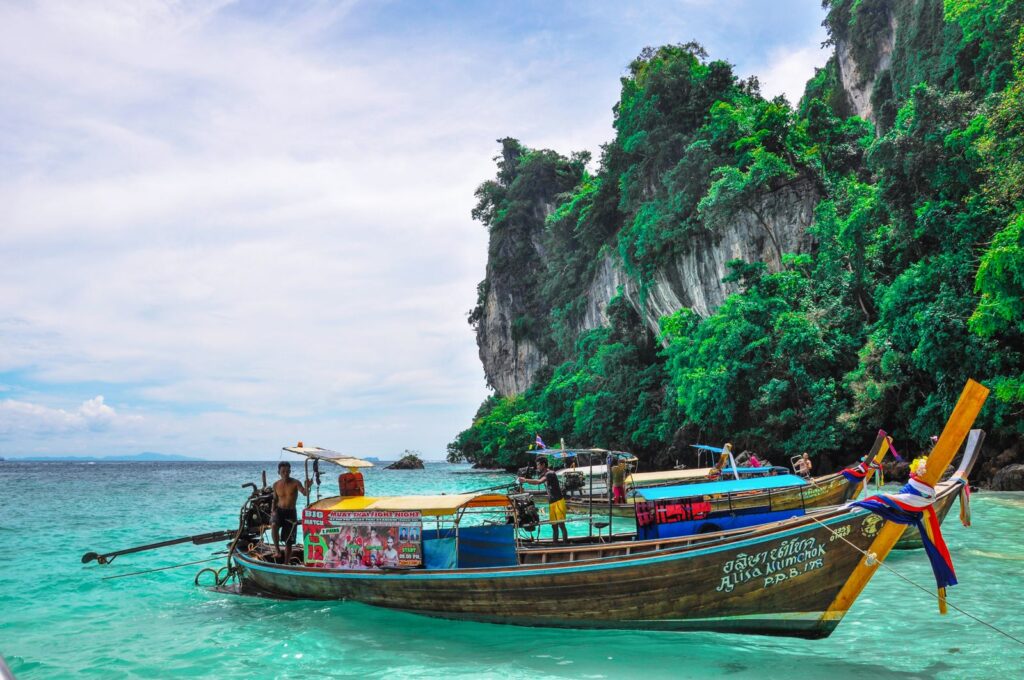
    Longtail boat on turquoise water beside a forested limestone cliff
    Photo: jaspreet kaur / Pexels

    It all adds up to a long day. Planning for that, rather than expecting to bounce straight into a busy schedule, makes a real difference.

    On the plane

    • Set your watch to Thai time when you board and start thinking in local hours.
    • Drink water regularly. Cabin air is dry and it is easy to fall behind.
    • Limit alcohol and caffeine, both of which can disturb sleep and add to dehydration.
    • Sleep if it is night-time in Thailand; try to stay awake if it is daytime.
    • Walk the aisle and stretch now and then.

    On the transfer and ferry

    Keep a bottle of water and a light snack with you for the drive and the ferry. It is tempting to nap in the car, but a short doze is better than a deep sleep if it is still daytime.

    Your first 48 hours on Koh Lanta: a simple plan

    Day one

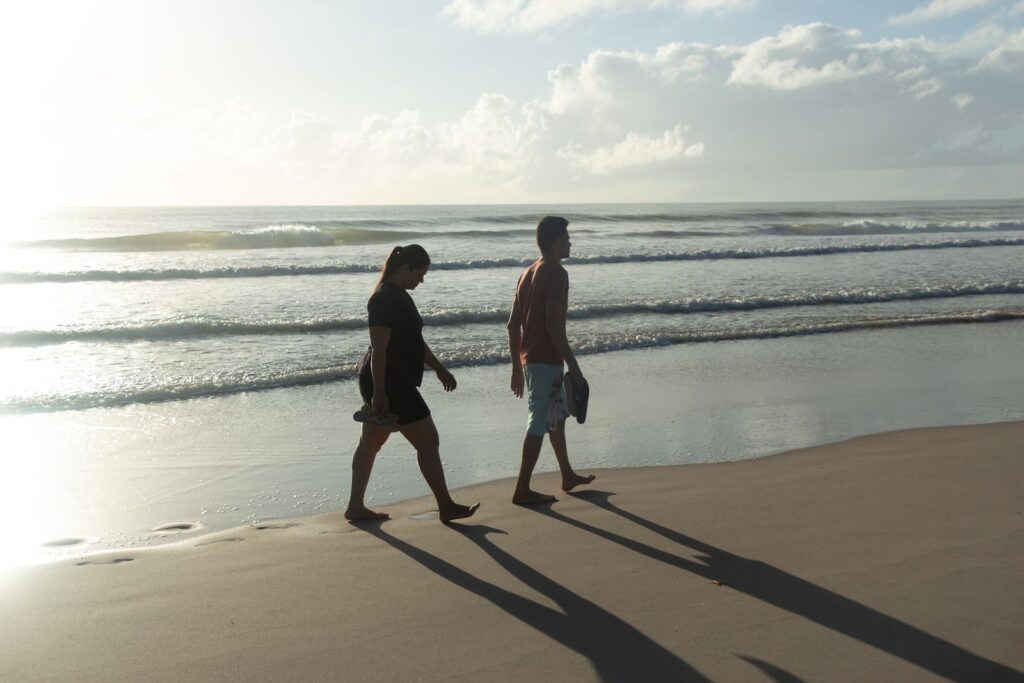
    Two people walking along a beach in soft morning light
    Photo: Eddie Oliveira / Pexels
    1. Get outside in daylight. Light is the strongest signal for resetting your body clock. A walk along the beach or a coffee on a shaded terrace counts.
    2. Eat at local mealtimes, even if you are not very hungry. Something light and familiar is fine.
    3. If you must nap, keep it short, ideally under 30 minutes and not late in the afternoon.
    4. Watch the sunset from a west-coast beach. It is a lovely way to mark the end of the day for your brain as well as your camera.
    5. Go to bed at a normal local time, in a cool, dark room.

    Day two

    1. Get up at a reasonable time, even after a broken night, and get morning light again.
    2. Plan gentle activity: a swim, a short walk or a relaxed trip to Lanta Old Town.
    3. Keep drinking water and eat regular meals.
    4. Save big days, such as dive trips and long island tours, for later in the week.

    Koh Lanta tip: Mornings on Koh Lanta are usually cooler and calmer than midday. An early beach walk gives you bright daylight to help your body clock without the full force of the afternoon heat.

    How can you sleep better in the heat?

    Heat and humidity can make it harder to fall asleep, especially when your body clock is already confused. A few simple steps help:

    Wooden bedroom with a bed under a white mosquito net
    Photo: Quang Nguyen Vinh / Pexels
    • Use air conditioning or a fan, and keep curtains closed during the day.
    • Take a cool shower before bed.
    • Avoid heavy meals and plenty of alcohol late in the evening.
    • Put your phone away for a while before sleeping.
    • If you wake in the night, stay calm, keep the lights low and rest rather than scrolling.

    Some people use melatonin for jet lag. Rules and availability vary between countries, so speak to a doctor or pharmacist before trying it, particularly if you take other medicines.

    Can an IV drip help with jet lag?

    An IV drip cannot reset your body clock; only light, sleep and time do that. What it can do is help you rehydrate after a long journey and top up some vitamins while you rest in your room.

    Man sitting by a swimming pool at sunset
    Photo: Manuel Campagnoli / Pexels

    Our Energy & Jet Lag drip contains vitamin B12, B complex and magnesium with fluids, and no caffeine. A registered nurse comes to your accommodation, runs a quick health check and stays with you for around 45 to 60 minutes. Many guests like it as a calm way to start the trip, then head out for daylight afterwards.

    If you would like to know more about the visit itself, see how it works.

    IV drip on Koh Lanta

    Energy & Jet Lag IV drip

    Shake off the journey and start your holiday with energy. A registered nurse comes to your villa, hotel or bungalow anywhere on Koh Lanta.

    When is it more than jet lag?

    Tiredness, poor sleep, mild headaches and a slightly off appetite are normal after a long flight and should ease within a few days. Some symptoms are not jet lag and need prompt attention.

    Woman resting in bed under a blanket with a cup of tea nearby
    Photo: Pavel Danilyuk / Pexels

    When to get medical help

    When to get medical help. Long flights slightly raise the risk of blood clots. Seek urgent help if you have a painful, swollen or warm calf, sudden breathlessness, chest pain or coughing up blood. Also get help for a high fever, confusion, fainting or severe headache. Call 1669 for an ambulance or go straight to hospital. Koh Lanta Hospital is near Lanta Old Town, and larger hospitals are in Krabi Town.

    Bringing your body clock to island time

    Most people find they feel settled within a few days, especially if they get morning light, eat at local times and keep the first couple of days gentle. Drink steadily, rest well and save the big adventures until you feel like yourself.

    If you would like a nurse to visit on your arrival day, message us on WhatsApp and we can talk through whether it suits you.

    Frequently asked questions

    How long does jet lag last in Thailand?

    It varies from person to person. Many people feel more settled within a few days, especially if they get daylight and keep to local mealtimes and bedtimes.

    Is jet lag worse flying from Europe to Thailand?

    Many people find flying east harder, because you need to sleep earlier than your body expects. Getting morning light helps.

    Does the Energy & Jet Lag drip contain caffeine?

    No. It contains vitamin B12, B complex, magnesium and fluids, with no caffeine.

    Should I nap on my first day on Koh Lanta?

    A short nap of under 30 minutes is fine, but avoid long or late-afternoon naps so you can sleep at a normal local bedtime.

  • IV Drip vs Drinking Water: Which Do You Really Need?

    IV Drip vs Drinking Water: Which Do You Really Need?

    Key takeaways

    • For most mild dehydration, drinking water with electrolytes is enough and costs very little.
    • An IV drip delivers fluids straight into a vein, so it can help when you cannot keep drinks down or feel too drained to catch up.
    • A drip is a wellness top-up, not a replacement for a doctor when you have red-flag symptoms.
    • A nurse health check first decides whether a drip is suitable for you at all.

    If you have spent a long, hot day on Koh Lanta and feel flat, you may be wondering about IV drip vs drinking water. Is a drip genuinely better, or is a big bottle of water just as good? The honest answer is that it depends on how you feel, why you are dehydrated and whether your stomach is cooperating.

    This guide sets out the differences plainly, so you can choose the simplest option that works for you. Very often, that will be the glass in your hand.

    How does your body rehydrate from drinking?

    When you drink, fluid passes through your stomach and is absorbed mainly in your small intestine. From there it moves into your bloodstream and on to your cells. It is a gentle, effective system that works well for most people most of the time.

    Woman drinking from a water bottle by the sea
    Photo: Kampus Production / Pexels

    Plain water replaces fluid, but when you sweat heavily you also lose salts such as sodium and potassium. That is why oral rehydration salts, sold at pharmacies in Saladan and along the main west-coast road, are so useful. A small amount of salt and sugar helps your gut absorb water more efficiently than water alone.

    The main limits of drinking are speed and comfort. If you feel sick, gulping a litre is unpleasant, and if you are vomiting, very little stays down long enough to be absorbed.

    What does an IV drip actually do differently?

    An IV drip delivers fluid directly into a vein through a small cannula, usually in your arm or hand. Because it skips the stomach, the fluid enters your circulation straight away. A typical drip takes around 45 to 60 minutes while you rest.
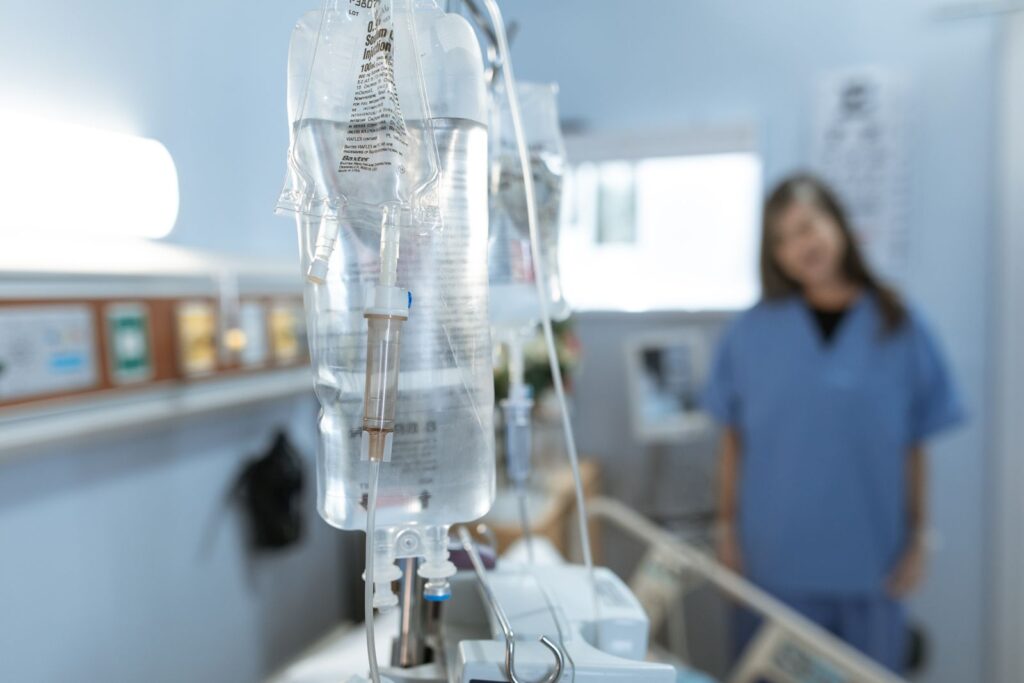
    IV fluid bags on a stand with a nurse in the background
    Photo: RDNE Stock project / Pexels

    Our Hydration Boost drip contains one litre of electrolyte fluids with B complex vitamins and magnesium. The fluid is the main event; the vitamins are a top-up rather than a magic ingredient.
    What a drip does not do is anything mysterious. It does not flush out toxins, it does not burn fat and it does not make you immune to the heat. It is simply another route for getting fluid and some nutrients into your body.
    When is drinking water enough?

    In most everyday holiday situations, drinking is all you need. That includes:

    Glass carafe of water and drinking glasses on a table
    Photo: Pavel Danilyuk / Pexels
    • Feeling thirsty or a little tired after a beach day.
    • Darker yellow urine that clears up once you drink more.
    • A mild headache after too much sun, which eases with water, shade and rest.
    • A light hangover where you can still eat and drink comfortably.
    • Sweating through a hike, a scooter trip or a yoga session.

    In these cases, sip steadily rather than downing everything at once. Add an oral rehydration sachet or a salty snack, and give yourself a few hours in the shade. Coconut water is pleasant too, though it is lower in sodium than proper rehydration salts.

    Koh Lanta tip: On Koh Lanta, keep a sachet or two of oral rehydration salts in your day bag. They weigh almost nothing, and a cool bottle of water from any shop along the west-coast road becomes a proper rehydration drink in seconds.

    When might an IV drip make more sense?

    There are times when drinking is genuinely difficult, and that is where a drip can help. Many guests consider one when:

    Tired woman lying in bed with her arm over her head
    Photo: Andrea Piacquadio / Pexels
    • Nausea makes it hard to keep fluids down, after a heavy night or a mild stomach upset.
    • You feel washed out after several hot days and cannot seem to catch up by drinking.
    • You have a short trip and want to rest comfortably at your villa rather than nursing a bottle all afternoon.
    • You are recovering from a big day of activity and prefer a calm, supervised top-up.

    Even then, a drip is a choice, not a necessity. If you can drink and you are improving, carry on drinking. A drip is a convenience and a comfort for the right person, not a shortcut everyone needs.

    IV drip vs drinking water: a side-by-side look

    Speed

    Drinking works over hours. A drip delivers its fluid during the session itself. Many guests say they feel more comfortable once the drip has finished, though everyone responds differently.

    Comfort

    Drinking is effortless when you feel well and hard work when you feel sick. A drip involves a small needle, which some people dislike, but you can lie down the whole time.

    Cost and convenience

    Water and rehydration salts are inexpensive and available everywhere. A drip costs more and needs a booking, a health check and an hour of your time.

    Safety

    Drinking is about as low-risk as it gets. A drip is generally safe when given by a registered nurse with sterile, single-use equipment, but it still carries small risks such as bruising, discomfort at the site or, rarely, infection. That is why screening matters.

    Who should not have an IV drip?

    A drip is not suitable for everyone. Our nurse runs a health check first and may advise against one if you have heart or kidney problems, are pregnant, take certain medicines or have other conditions that affect how your body handles fluid. If in doubt, ask before you book. You can read more about the process on our how it works page.

    Nurse talking with a patient seated in a bright waiting area
    Photo: Cedric Fauntleroy / Pexels

    When to get medical help

    When to get medical help. Do not wait for a drip if you or someone with you has confusion, fainting, chest pain, severe or bloody diarrhoea, a high fever, a very fast heartbeat, no urine for many hours or cannot keep any fluids down for a long period. Call 1669 for an ambulance or go straight to hospital. Koh Lanta Hospital is near Lanta Old Town on the east coast, and larger hospitals are in Krabi Town.

    How can a Hydration Boost drip help?

    For the right person, a Hydration Boost drip can help you rehydrate while you rest in your own room. A registered nurse comes to your villa, hotel or bungalow, checks your health and history, and only goes ahead if it is suitable. The drip then runs for around 45 to 60 minutes.

    It supports your fluid and electrolyte balance alongside, not instead of, sensible drinking, food and shade. Most guests carry on sipping water afterwards and take it easy for the rest of the day.

    IV drip on Koh Lanta

    Hydration Boost IV drip

    Fast rehydration for hot days, long excursions and upset stomachs. A registered nurse comes to your villa, hotel or bungalow anywhere on Koh Lanta.

    Simple ways to stay hydrated without either

    The best plan is to avoid needing much catching up at all. A few habits go a long way in the tropical heat:

    Watermelon slices and fresh fruit at a market stall
    Photo: Chukwuka Prosper / Pexels
    1. Start the day with a large glass of water before coffee.
    2. Carry water on every outing, especially scooter rides and island trips.
    3. Plan beach time for the morning and late afternoon, and rest in the shade around midday.
    4. Alternate alcoholic drinks with water at sunset bars.
    5. Eat salty, water-rich foods such as soups, fruit and rice dishes.
    6. Check your urine colour: pale straw is a good sign.

    The bottom line on IV drips and water

    For most people, most of the time, drinking water with some electrolytes is all you need, and it is the first thing to try. An IV drip is a useful option when nausea or exhaustion makes drinking hard, or when you would simply rather rest while a nurse looks after you.

    If you are unsure which suits you, message us on WhatsApp and we will talk it through honestly, including telling you when a drip is not the right choice.

    Frequently asked questions

    Is an IV drip better than drinking water?

    Not usually. For mild dehydration, water with electrolytes works well. A drip can help when you cannot keep fluids down or feel too drained to catch up by drinking.

    How much fluid is in a Hydration Boost drip?

    It contains one litre of electrolyte fluids with B complex vitamins and magnesium, given over around 45 to 60 minutes after a nurse health check.

    Can I just drink electrolytes instead?

    Yes. Oral rehydration salts from local pharmacies are an excellent first step and are often all you need.

    Should I still drink water after an IV drip?

    Yes. Keep sipping water, eat normally and rest in the shade for the rest of the day.

  • Upset Stomach on Koh Lanta? What to Do and When to Get Help

    Upset Stomach on Koh Lanta? What to Do and When to Get Help

    Key takeaways

    • Most travel tummy bugs settle within a few days with fluids, rest and gentle food.
    • Oral rehydration salts are the most important thing you can take, and pharmacies sell them cheaply.
    • Blood in your stool, a high fever, severe pain or signs of serious dehydration mean you need a doctor.
    • An IV drip is only an option after a nurse check, and never a replacement for a doctor when red flags are present.

    New food, a different climate and a change in routine can unsettle anyone’s stomach. If you have an upset stomach on Koh Lanta and are wondering what to do, the good news is that most cases of traveller’s diarrhoea are mild and pass within a few days. The key is to stay hydrated, rest, and know the signs that mean you need proper medical care.

    Why do travellers get an upset stomach in Thailand?

    Traveller’s diarrhoea is usually caused by germs your body is not used to, picked up from food, water or unwashed hands. It can happen anywhere in the world, not just in Thailand, and it is not always a sign of anything you did wrong.

    Busy evening market stall with trays of colourful cooked food
    Photo: MINEIA MARTINS / Pexels

    Other things can upset your stomach too: lots of rich or spicy food, too much alcohol, too much sun, or simply a big change in diet. Typical symptoms include loose or watery stools, stomach cramps, nausea, bloating and sometimes vomiting or a mild temperature.

    Upset stomach on Koh Lanta: what to do first

    Your main job is to replace the fluid and salts you are losing. Diarrhoea and vomiting can dehydrate you quickly, especially in the heat.

    Woman lying on a sofa feeling unwell
    Photo: Polina Zimmerman / Pexels
    1. Start oral rehydration salts. Mix ORS sachets with bottled water exactly as the packet says, and sip often, even if only small mouthfuls.
    2. Keep drinking between toilet trips. Small, frequent sips are easier to keep down than big gulps.
    3. Rest somewhere cool. Stay out of the sun and give your body a break from activities.
    4. Wash your hands well and avoid sharing towels or drinks, as stomach bugs spread easily.

    Koh Lanta tip: Pharmacies in Saladan and along the main west-coast road stock oral rehydration salts and can advise on over-the-counter options. If you are staying further south, it is worth buying a few sachets in advance so you are not hunting for them when you feel unwell.

    Traveller’s diarrhoea self-care: medicines and pharmacies

    Pharmacists can be a helpful first stop for mild symptoms. A few points to keep in mind:

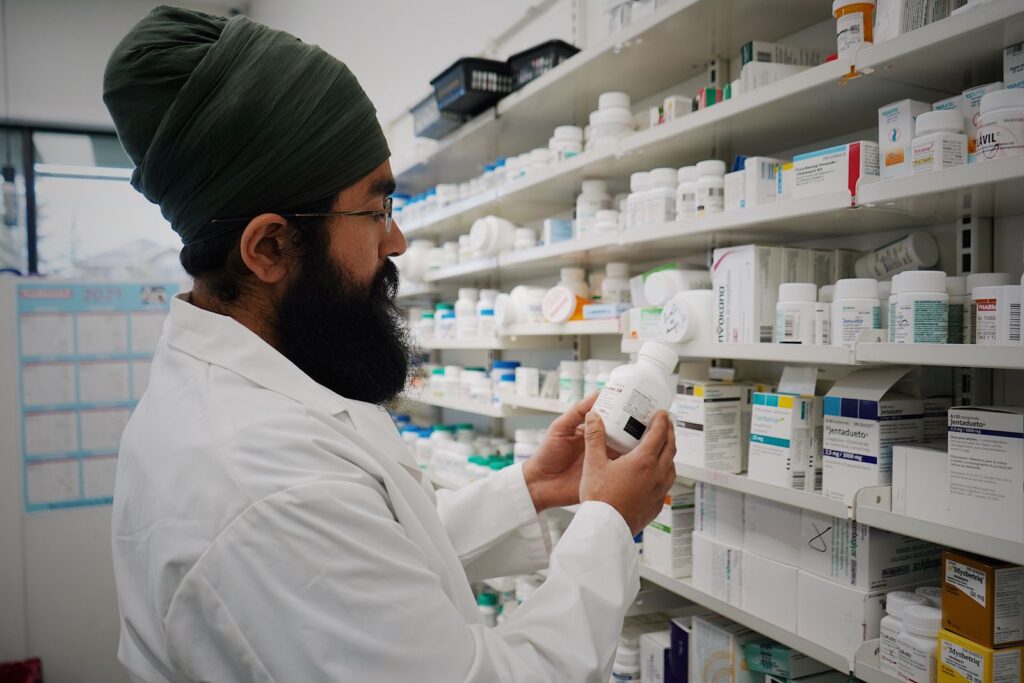
    Pharmacist checking medicine on pharmacy shelves
    Photo: World Sikh Organization of Canada / Pexels
    • Anti-diarrhoea tablets can ease symptoms for adults with mild diarrhoea, but they are not recommended if you have a fever or blood in your stool, and they are not suitable for young children.
    • Do not take antibiotics without advice. They are not needed for most mild tummy bugs.
    • Tell the pharmacist about any other medicines you take, allergies, or if you are pregnant.
    • Paracetamol is generally gentler on the stomach than ibuprofen for aches or a mild temperature.

    What should you eat with an upset stomach?

    You do not need to starve yourself. Once you feel ready to eat, start with small portions of plain, easy food.

    Simple bowl of porridge with a spoon
    Photo: Tara Winstead / Pexels
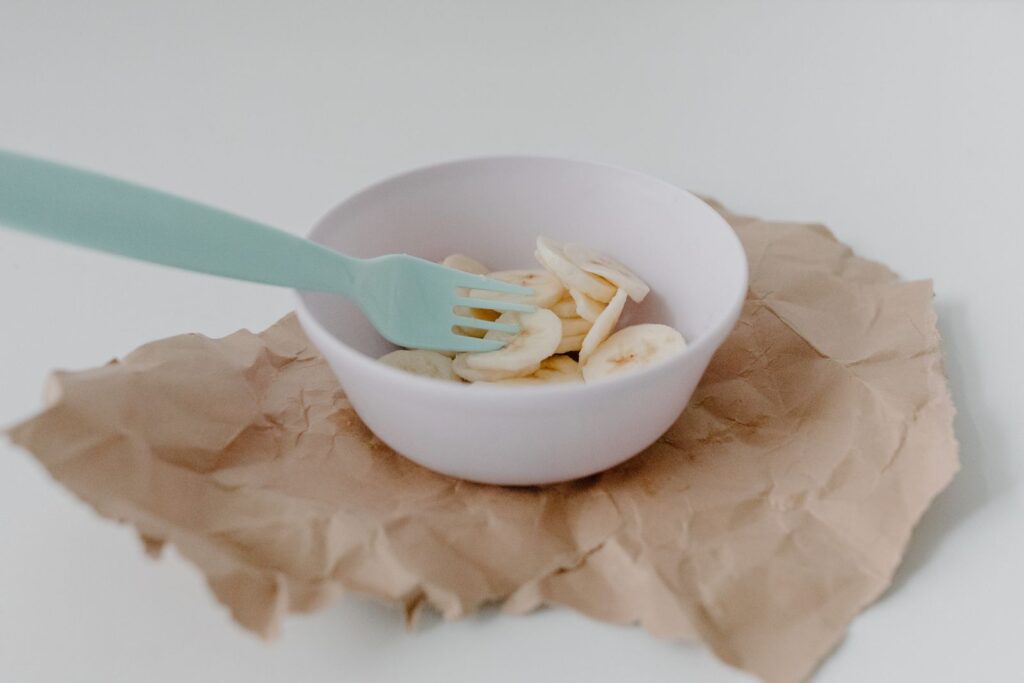
    • Gentle options: plain rice, rice soup (khao tom) or rice porridge (jok), toast, crackers, bananas, plain noodles, boiled eggs.
    • Avoid for a few days: very spicy dishes, greasy fried food, raw salads, dairy if it makes things worse, alcohol and lots of coffee.
    • Build back up slowly as your appetite returns.

    When you feel better, simple habits help avoid a repeat: wash your hands before eating, choose busy places where food is cooked fresh and served hot, and stick to bottled or filtered water.

    When should you see a doctor?

    Most stomach bugs are mild, but some need medical attention. Please do not try to manage these at your accommodation.

    Doctor in a white coat writing notes at a desk
    Photo: cottonbro studio / Pexels

    When to get medical help

    See a doctor or go to hospital if you have blood or black, tarry material in your stool, a high fever, severe or constant stomach pain, vomiting that stops you keeping any fluids down, diarrhoea lasting more than a few days, or signs of serious dehydration such as very little urine, dizziness when standing, confusion or a racing heart. Seek help early for young children, older adults, pregnant women and anyone with a long-term health condition. In an emergency, or if someone collapses or is very drowsy, call 1669 for an ambulance. Koh Lanta Hospital is near Lanta Old Town on the east coast, and larger hospitals are in Krabi Town.

    Fever in Thailand also needs to be taken seriously, as it can have causes other than a simple tummy bug. If you have a fever, especially with body aches, a rash or a severe headache, get checked by a doctor.

    Can an IV drip help with a stomach bug?

    For a mild stomach upset, an IV drip is not necessary. ORS and rest are the right first steps. However, if you have no red-flag symptoms but are finding it hard to keep up with your fluids, a drip may be an option to help you rehydrate.

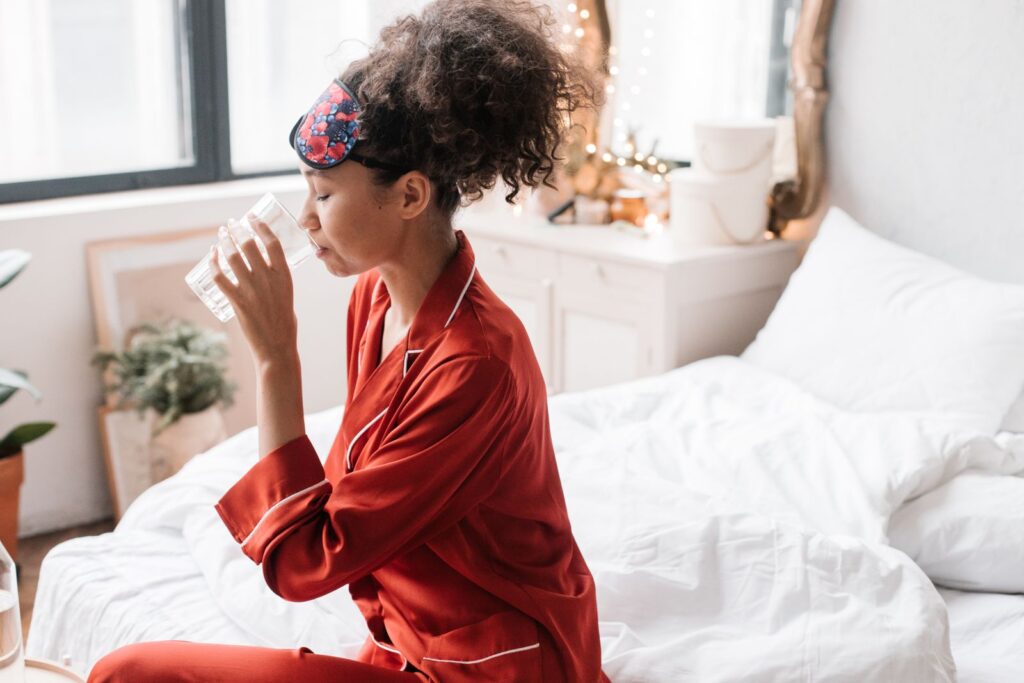
    Woman sitting up in bed drinking a glass of water
    Photo: Pavel Danilyuk / Pexels

    Our Hydration Boost drip contains 1 litre of electrolyte fluids, B complex vitamins and magnesium. Before anything else, a registered nurse does a health check at your villa, hotel or bungalow. If they find any warning signs, they will advise you to see a doctor instead of giving a drip. If it is suitable, the drip takes around 45 to 60 minutes and supports your rehydration while you rest. It does not treat the infection itself, and it is not a replacement for a doctor. You can read more about the visit on our how it works page.

    IV drip on Koh Lanta

    Hydration Boost IV drip

    Fast rehydration for hot days, long excursions and upset stomachs. A registered nurse comes to your villa, hotel or bungalow anywhere on Koh Lanta.

    Getting back to your holiday

    Once the diarrhoea has stopped and you are eating normally again, ease back into things. A day of gentle activity before a big boat trip, dive or long scooter ride gives your body time to recover. Keep drinking well, as it can take a little while to fully rehydrate, especially in the heat. Our guide to dehydration in Thailand has more tips.

    The bottom line

    An upset stomach on Koh Lanta is unpleasant but usually short-lived. Rehydrate with ORS, rest somewhere cool, eat plain food, and keep a close eye on the warning signs. If you are unsure whether a home visit is appropriate, message us on WhatsApp, and if red-flag symptoms appear, see a doctor without delay.

    Frequently asked questions

    How long does traveller’s diarrhoea last?

    Most cases settle within a few days. If it lasts longer, or you develop a high fever, blood in your stool or severe pain, see a doctor.

    Where can I buy rehydration salts on Koh Lanta?

    Pharmacies in Saladan and along the main west-coast road sell ORS sachets, and many convenience stores stock them as well.

    Should I take antibiotics for a stomach bug in Thailand?

    Not without medical advice. Most mild tummy bugs get better on their own with fluids and rest.

    Can I get an IV drip for food poisoning?

    Only after a nurse’s health check, and only if there are no warning signs. If you have red-flag symptoms, the nurse will advise you to see a doctor instead.

  • Heat Exhaustion on Koh Lanta: Signs, First Aid and Prevention

    Heat Exhaustion on Koh Lanta: Signs, First Aid and Prevention

    Key takeaways

    • Heat exhaustion is your body struggling to cool down, and it usually improves within 30 minutes of cooling and fluids.
    • Heatstroke is a medical emergency: confusion, collapse or a very high temperature means calling 1669.
    • Shade, cool water, rest and electrolytes are the first aid basics.
    • The hot season, roughly March to May, needs extra care, especially on scooters and boat trips.

    Koh Lanta’s sunshine is a big part of its charm, but the combination of heat, humidity and a busy holiday can catch people out. Heat exhaustion on Koh Lanta often happens on an ordinary day: a scooter ride to the south of the island, a walk around Lanta Old Town at midday, or an afternoon on a boat with no shade.

    Knowing the signs, and the difference between heat exhaustion and heatstroke, means you can act quickly and keep a bad afternoon from becoming an emergency.

    What is heat exhaustion?

    Heat exhaustion happens when your body gets too hot and loses too much water and salt through sweating. It is not usually dangerous if you cool down quickly, but if it is ignored it can progress to heatstroke.

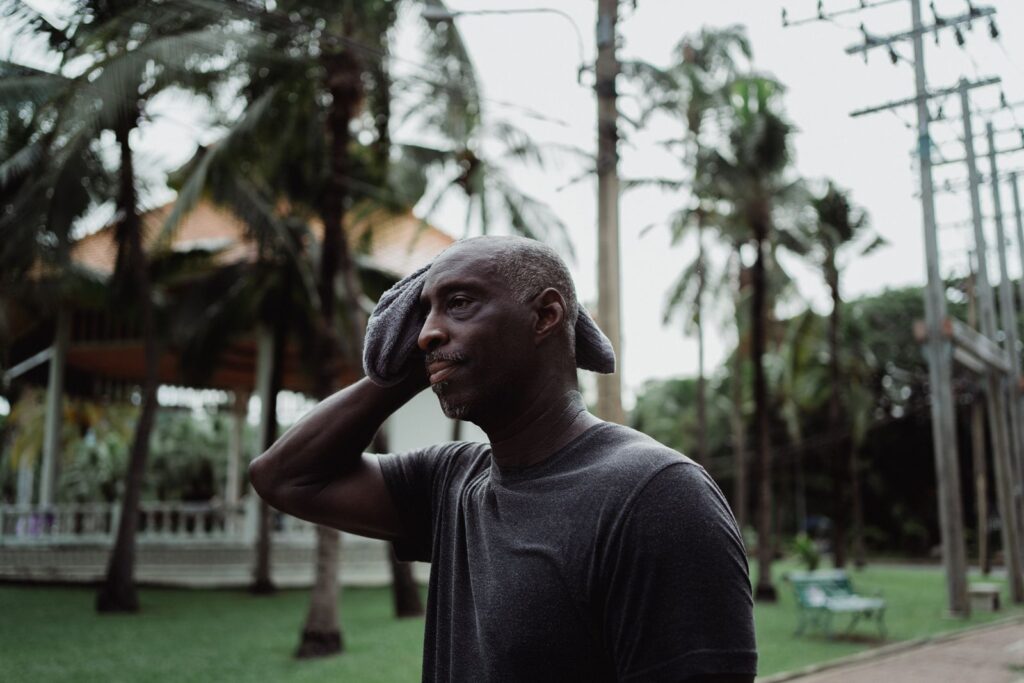
    Man wiping sweat from his forehead under palm trees
    Photo: Ketut Subiyanto / Pexels

    Common signs include:

    • Heavy sweating and cool, clammy skin.
    • Headache, dizziness or feeling faint.
    • Nausea or loss of appetite.
    • Muscle cramps in the arms, legs or stomach.
    • Fast breathing or a fast pulse.
    • Intense thirst and tiredness.

    Heat exhaustion vs heatstroke: what is the difference?

    This is the most important part of the article. Heatstroke is when your body’s temperature control stops working properly. It is a medical emergency.

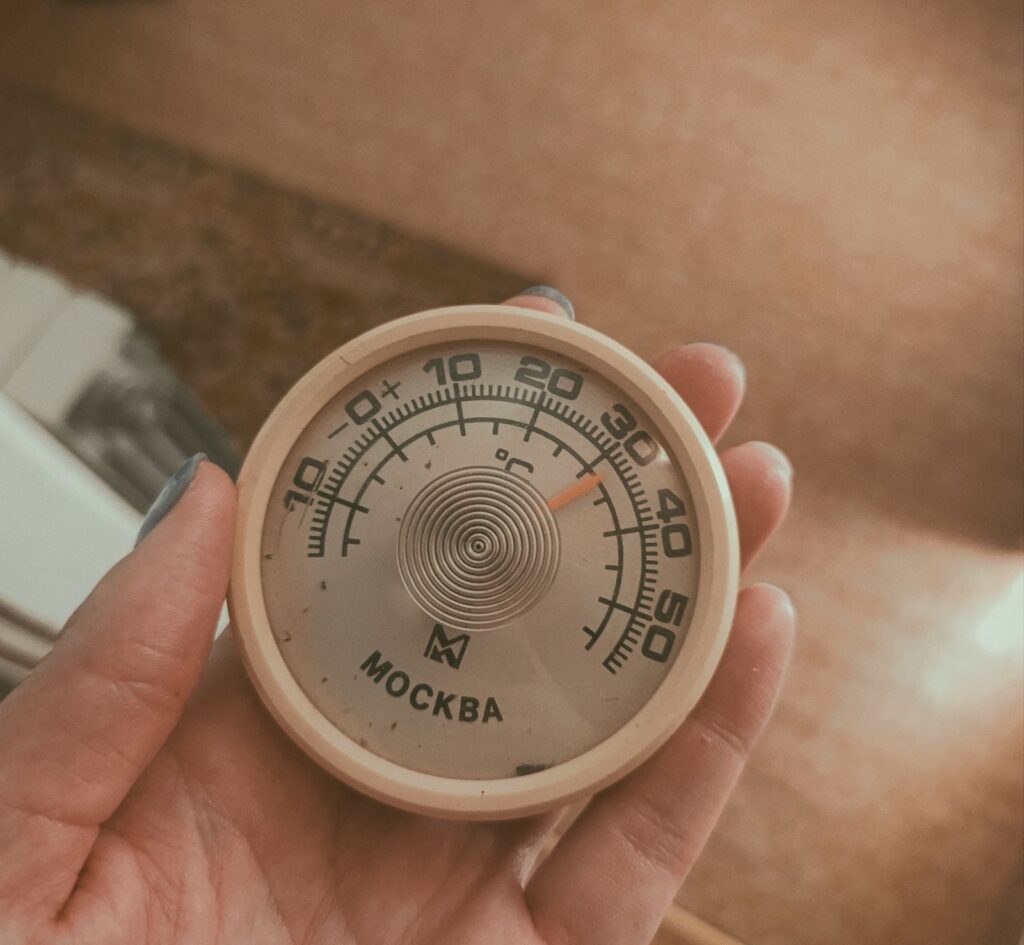
    Hand holding a round thermometer
    Photo: Mili Drag / Pexels
    • Heat exhaustion: sweating, clammy skin, feeling weak and dizzy, but the person is alert and starts improving with rest and cooling.
    • Heatstroke: a very high body temperature, confusion, slurred speech, strange behaviour, seizures, fainting or collapse. Skin may be hot and dry, or still sweaty. The person does not improve with simple cooling.

    If you are unsure which one it is, treat it as heatstroke and get help.

    When to get medical help

    Call 1669 (Thailand’s emergency ambulance number) straight away if someone is confused, has slurred speech, has a seizure, collapses or loses consciousness, or does not improve within 30 minutes of cooling down. While you wait, move them into the shade, remove extra clothing, cool them with water and fanning, and do not give fluids if they are not fully alert. Go to hospital for any suspected heatstroke. Koh Lanta Hospital is near Lanta Old Town on the east coast, and larger hospitals are in Krabi Town.

    Heat exhaustion first aid: what to do right now

    If you or someone with you shows signs of heat exhaustion, act straight away:

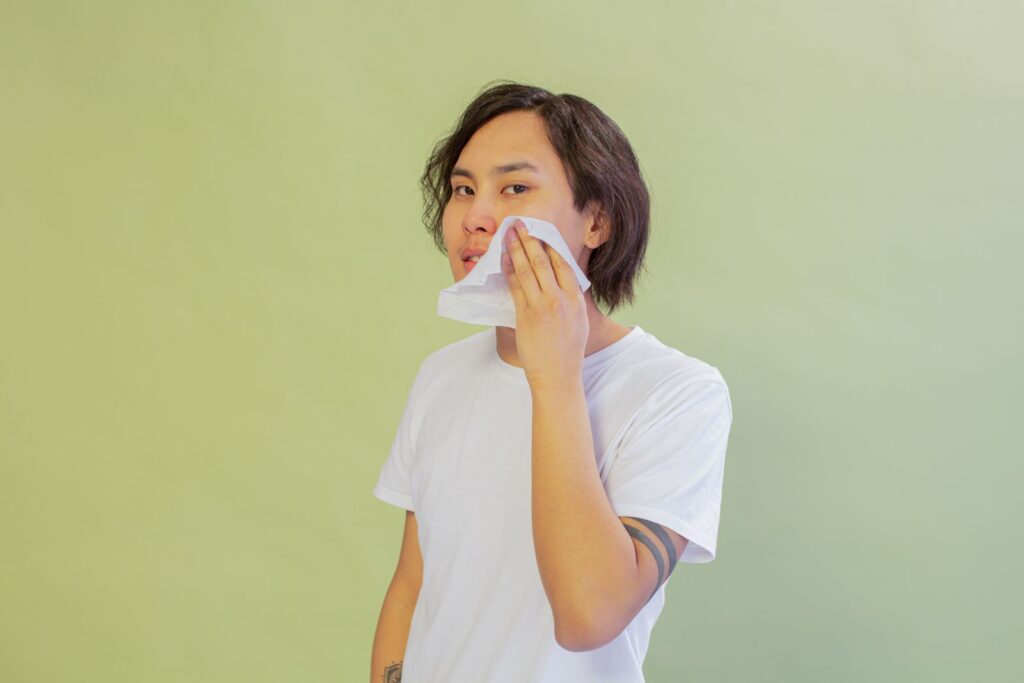
    Woman wiping her face with a white towel
    Photo: Monstera Production / Pexels
    1. Get out of the heat. Move into shade, an air-conditioned room or anywhere with a breeze.
    2. Lie down and raise the legs slightly if feeling faint.
    3. Cool the skin. Use cool, wet cloths on the neck, armpits and forehead, spray or splash with water, and fan the skin.
    4. Sip fluids. Water is fine, but oral rehydration salts or a sports drink help replace lost salts.
    5. Loosen or remove tight or extra clothing.
    6. Stay with them and watch for any of the heatstroke signs above.

    Most people start to feel better within about 30 minutes. Even then, take the rest of the day easy, stay in the shade and keep drinking. Your body needs time to recover.

    Heat exhaustion on Koh Lanta: why is the hot season riskier?

    Koh Lanta is warm all year, but the hot season, roughly March to May, brings the highest temperatures, and the end of high season overlaps with it. Humidity makes it harder for sweat to evaporate and cool you, so you can overheat even when it does not feel scorching.

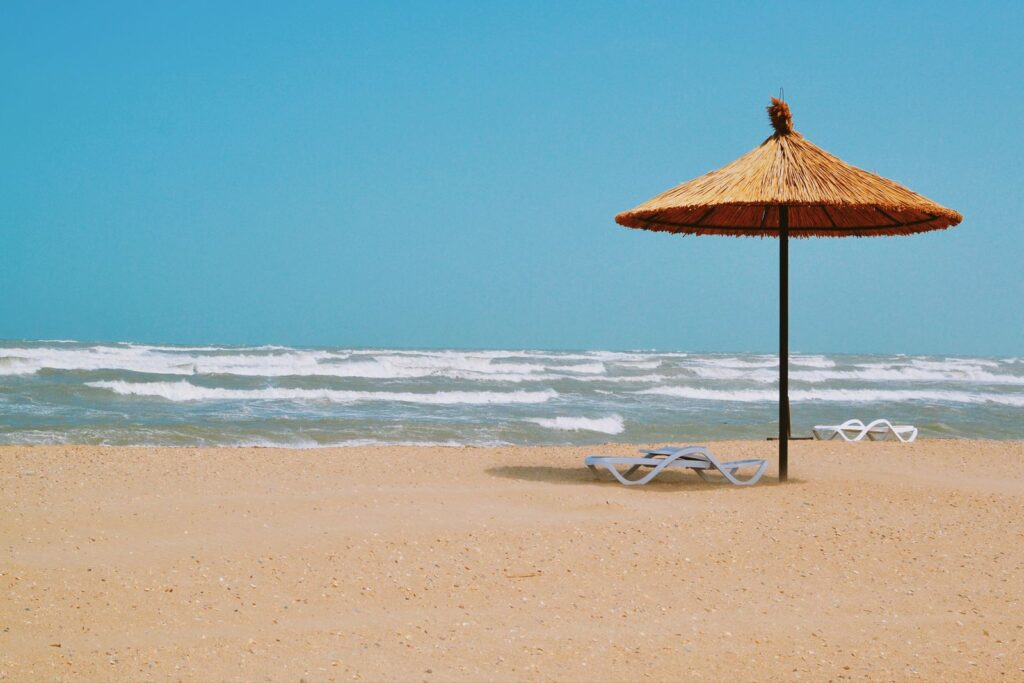
    Thatched umbrella on an empty beach under a bright midday sun
    Photo: Darya Grey_Owl / Pexels

    People at higher risk include young children, older adults, anyone with heart or kidney problems, people taking certain medicines such as diuretics, and anyone who has just arrived from a cold climate. Alcohol and a recent tummy bug also make heat illness more likely.

    How to avoid heat exhaustion on scooter and island trips

    Two of the most popular ways to explore Koh Lanta, scooters and boat trips, are also when people tend to overheat.

    Scooter rider on a quiet road through green tropical trees
    Photo: Serg Alesenko / Pexels

    On a scooter

    • The breeze while riding hides how hot you are getting. Stop regularly for shade and a drink.
    • Plan longer rides, for example from Saladan down to Kantiang Bay, for the morning or late afternoon.
    • Wear a helmet, a light long-sleeved top and sunscreen, and carry water.
    • Pull over and rest if you feel dizzy. Riding while light-headed is dangerous.

    On a boat or island trip

    • Take more water than you think you need, plus an ORS sachet.
    • Sit in the shade between stops, and wear a hat and a rash vest when snorkelling.
    • Skip the beers until you are back on land.
    • Tell the crew straight away if anyone in your group feels unwell.

    Koh Lanta tip: Use the cooler parts of the day for exploring. Mornings are great for the beaches and viewpoints, and the late afternoon is perfect for heading to a west-coast beach for sunset. Save the hottest hours for a long lunch, a swim or a nap.

    Recovering the day after heat exhaustion

    Even after you feel better, you may be tired, headachy or a bit washed out the next day. Keep drinking little and often, add electrolytes, eat light salty food, and avoid strenuous activity and alcohol until you feel fully back to normal.

    Simple bedroom with an electric fan and a window letting in light
    Photo: Enock Ojambo / Pexels

    If you are struggling to rehydrate, a Hydration Boost drip is one option once the acute episode has passed and you are alert and stable. It contains 1 litre of electrolyte fluids, B complex vitamins and magnesium, and a registered nurse gives it at your accommodation after a health check, over roughly 45 to 60 minutes. It can help top up your fluids, but it is a wellness service and never a substitute for emergency care if heatstroke signs appear.

    IV drip on Koh Lanta

    Hydration Boost IV drip

    Fast rehydration for hot days, long excursions and upset stomachs. A registered nurse comes to your villa, hotel or bungalow anywhere on Koh Lanta.

    For more on staying hydrated day to day, read our guide to dehydration in Thailand.

    Stay cool and enjoy the island

    Heat exhaustion on Koh Lanta is very preventable. Respect the midday sun, drink and add electrolytes regularly, take breaks on scooter rides and boat trips, and know the heatstroke warning signs. If you would like advice on whether a home-visit drip suits you during your recovery, message us on WhatsApp.

    Frequently asked questions

    How long does heat exhaustion last?

    With prompt cooling, rest and fluids, most people start to feel better within about 30 minutes, although tiredness can last into the next day. If there is no improvement within 30 minutes, get medical help.

    What is the hottest time of year on Koh Lanta?

    The hot season runs roughly from March to May, when temperatures and the risk of heat illness are highest.

    Can I have an IV drip for heatstroke?

    No. Heatstroke is a medical emergency, so call 1669 or go to hospital. A wellness drip is only an option later, once someone is alert, stable and recovering.

    Should I drink water or electrolytes for heat exhaustion?

    Water helps, but oral rehydration salts or a sports drink are better because they replace the salts lost through sweat.